Weight Loss
How Many Calories Should I Eat to Lose Weight?
If you want to lose weight, you generally need to eat fewer calories than your body uses over time. But the number of calories you should eat is not the same for everyone.
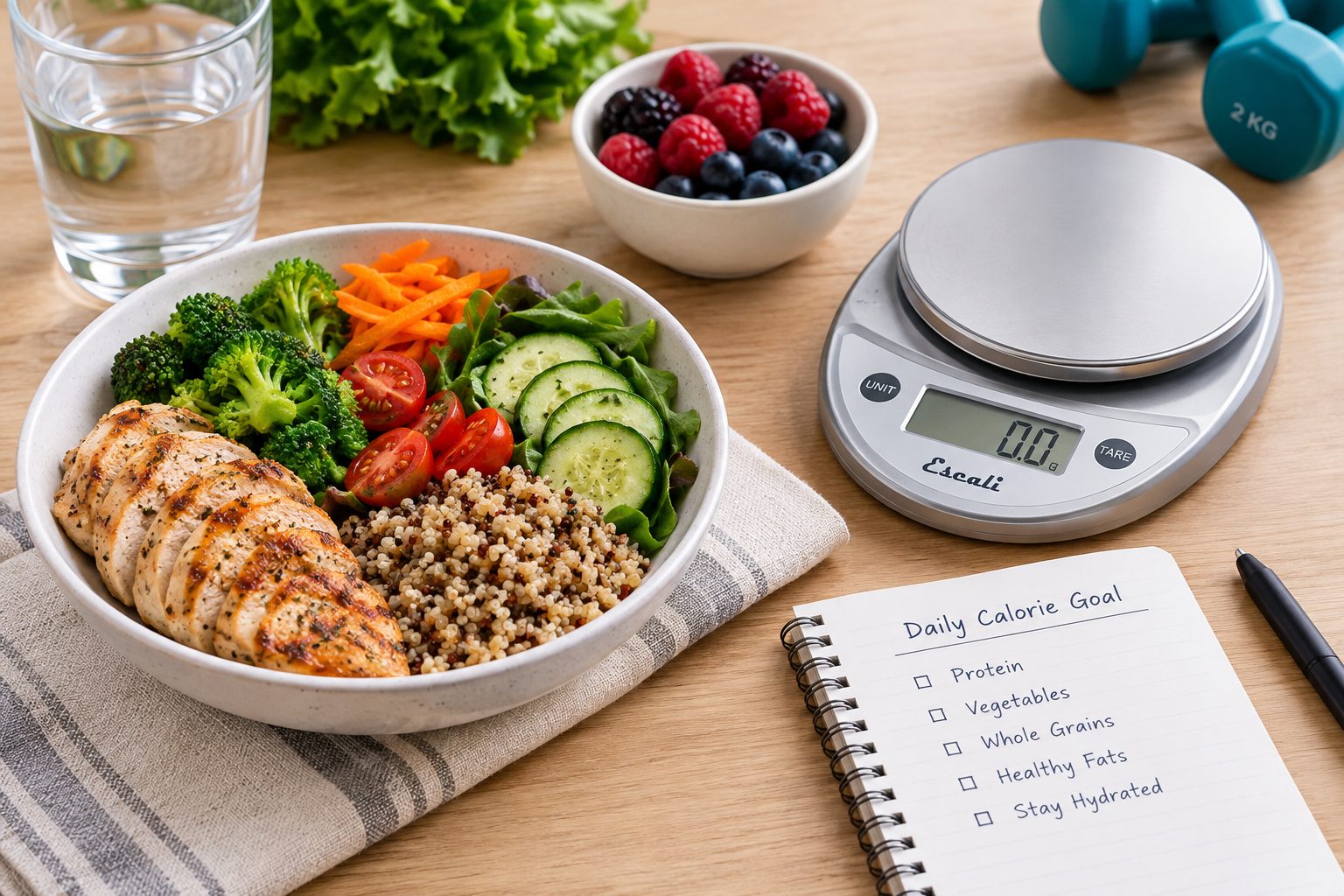
How Many Calories Should I Eat to Lose Weight?
If you want to lose weight, you generally need to eat fewer calories than your body uses over time. But the number of calories you should eat is not the same for everyone.
Your starting calorie target depends on factors such as your age, sex, height, current weight, activity level, and total daily energy expenditure. It can also change as your weight, activity, and routine change.
A practical way to estimate your calories for weight loss is to start with an estimate of your maintenance calories, create a reasonable calorie deficit, track your progress for several weeks, and adjust your intake if needed.
There is no single calorie number that guarantees weight loss for everyone.
Start With Your Maintenance Calories
Maintenance calories are the approximate number of calories you need to maintain your current body weight over time.
Your maintenance needs are influenced by your resting energy expenditure, daily movement, exercise, digestion, and other factors that affect how much energy your body uses.
One useful starting point is to estimate your total daily energy expenditure, commonly called TDEE.
A TDEE estimate is not a perfect measurement of your metabolism. It is a starting point that can help you choose a reasonable calorie target.
For example, imagine someone estimates that they maintain their weight at about 2,400 calories per day.
Eating around 2,400 calories would theoretically maintain their weight if that estimate were accurate and their activity remained similar.
To lose weight, they would generally need to consume fewer calories than that over time.
Create a Reasonable Calorie Deficit
A calorie deficit occurs when your energy intake is lower than the energy you use.
For weight loss, the goal is not necessarily to create the largest possible deficit. A moderate, sustainable approach is often easier to maintain than aggressive restriction.
For example, someone with estimated maintenance calories of 2,400 calories might begin with a target around 1,900 to 2,100 calories per day.
That is only an example, not a universal prescription.
The appropriate deficit depends on the individual, their starting point, activity level, preferences, and ability to maintain the plan.
A very aggressive calorie restriction can make it harder to get enough protein, fiber, vitamins, minerals, and other nutrients. It can also make hunger, fatigue, and adherence more difficult.
Use a Calorie Calculator as a Starting Point
A calorie calculator can help estimate your daily energy needs based on information such as age, sex, height, weight, and activity level.
The important word is estimate.
Your actual energy expenditure can differ from a calculator result because formulas cannot perfectly capture every person's metabolism, movement, body composition, or daily routine.
Instead of treating the calculator's result as an exact number, use it as a starting point.
Then let your real-world weight trend help you determine whether the target is appropriate.
What About the 3,500-Calorie Rule?
You may have heard that losing one pound of body fat requires a 3,500-calorie deficit.
This number can be useful as a rough arithmetic example, but it should not be treated as a precise prediction of weight loss.
Human body weight does not respond to calorie deficits in a perfectly linear way. As body weight changes, energy expenditure can also change, and the composition of the weight lost is not always the same.
Research has shown that simple static calorie rules can overestimate long-term weight loss.
That is why a better approach is to think in terms of trends rather than expecting a specific number of pounds from a specific number of calories.
How Fast Should You Lose Weight?
There is no single ideal rate for every person.
A reasonable goal should take into account your starting weight, health, nutrition, activity, and how well you can maintain the plan.
The Centers for Disease Control and Prevention notes that gradual, steady weight loss is more likely to be maintained than very rapid weight loss.
Rather than trying to force the scale to move as quickly as possible, focus on a calorie target that you can realistically follow.
If your diet leaves you constantly hungry, exhausted, or unable to train and function normally, the plan may be too aggressive.
Your Calorie Target Can Change Over Time
One of the biggest mistakes people make is assuming that the calorie target they choose at the beginning of a diet should remain unchanged forever.
Your energy needs can change as your body weight decreases.
For example, imagine someone starts at 2,400 maintenance calories and chooses a 2,000-calorie target.
After losing weight, their maintenance needs may become lower because they now have less body mass to move and maintain.
Their original 2,000-calorie intake may therefore produce a smaller deficit than it did at the beginning.
This does not mean you automatically need to keep cutting calories.
It means your calorie target should be evaluated using your progress, hunger, activity, and overall results.
Track Your Progress Before Making Changes
Daily body weight can be noisy.
Your scale weight can change because of water, glycogen, sodium intake, food still being digested, hydration, bowel movements, and other short-term factors.
That means a single weigh-in does not tell you whether your calorie target is working.
Instead, look at your weight trend over multiple weeks.
For example:
- Weigh yourself under similar conditions when practical.
- Record the results consistently.
- Look at weekly averages or broader trends.
- Avoid reacting to one unusually high or low reading.
- Give your plan enough time to reveal a meaningful trend.

RENPHO Elis Aspire Smart Scale
Track your weight trends over time with a Wi-Fi and Bluetooth smart scale that syncs with an app.
AmazonView on AmazonA smart scale can make it easier to collect consistent weight measurements and follow your weight trend over time. The important metric for this purpose is the trend in body weight, not the individual body-composition estimates that some consumer scales provide.
Portion Tracking Can Make a Difference
Even when someone knows their calorie target, estimating portions can be difficult.
A meal that looks small can contain substantially more calories than expected, particularly when oils, sauces, dressings, spreads, drinks, and calorie-dense ingredients are involved.
That does not mean you need to weigh every food forever.
But temporarily measuring portions can help you learn what your usual serving sizes actually contain.

Escali Primo Digital Food Scale
Make portion tracking easier with a simple, precise digital food scale.
AmazonView on AmazonA food scale can be particularly useful for foods where portion size is difficult to estimate visually.
For example, measuring 30 grams of nuts, 100 grams of cooked rice, or a specific amount of cereal can give you a more consistent reference than relying only on visual estimates.
The goal is not perfect precision. It is better awareness.
Meal Preparation Can Make Your Calorie Target Easier to Follow
Planning meals ahead of time can reduce the number of decisions you need to make when you are hungry or busy.
You can prepare portions in advance, keep convenient foods available, and make it easier to stay close to your calorie target.

Dealusy 10-Pack Glass Meal Prep Containers
Prep and portion your meals ahead of time with reusable glass containers in two practical sizes.
AmazonView on AmazonMeal-prep containers can be useful when you prepare several meals at once and want consistent portions ready to go.
A simple meal might include a protein source, vegetables or fruit, a carbohydrate source, and a moderate amount of fat.
For example, chicken breast, rice, vegetables, and a small amount of olive oil can form a relatively simple meal that is easier to portion and track.
The specific foods you choose matter less than building an overall eating pattern that provides enough nutrients while fitting your calorie target.
Don't Ignore Protein and Fiber
Weight loss is not only about calories.
Food quality can affect how easy it is to maintain a calorie deficit.
Protein can help support muscle maintenance and can contribute to fullness. Fiber-rich foods can also help increase satiety and make meals more filling.
Useful foods can include:
- Lean meats and poultry
- Fish
- Eggs
- Greek yogurt
- Beans and lentils
- Oats
- Vegetables
- Fruits
- Whole grains
For people who exercise regularly, adequate protein becomes particularly important because maintaining muscle mass is one of the goals of a well-designed weight-loss plan.
A calorie deficit without attention to protein, resistance training, and overall nutrition may not produce the body-composition result you want.
What If Your Weight Isn't Going Down?
If you have been following your calorie target consistently for several weeks and your weight trend is not moving downward, there are several possibilities.
Your estimated maintenance calories may be higher or lower than expected.
Your actual calorie intake may also be higher than your tracking suggests.
Common sources of unintentional calories include:
- Cooking oils
- Sauces and dressings
- Sugary drinks
- Alcohol
- Snacks
- Large portions
- Restaurant meals
- Weekend eating
- Inaccurate serving estimates
Before making a major calorie reduction, review your tracking and activity.
If your intake is already quite low, cutting substantially further may not be the best solution.
What If You Are Losing Weight Too Quickly?
The opposite situation can also happen.
If your weight is dropping very quickly, you are struggling with hunger, feeling unusually fatigued, or having difficulty maintaining normal activity, your calorie deficit may be too aggressive.
Weight loss can also appear unusually fast at the beginning of a diet because changes in glycogen and water can cause the scale to fall quickly.
That does not necessarily mean the same rate will continue.
Focus on the longer-term trend rather than assuming the first week represents your future rate of weight loss.
A Simple Example
Imagine a hypothetical person whose estimated maintenance intake is 2,400 calories.
They decide to start eating approximately 2,000 calories per day.
Their plan might look like this:
- Estimate maintenance calories.
- Choose a moderate calorie deficit.
- Build meals around protein, vegetables, fruits, whole grains, and other nutritious foods.
- Track portions consistently.
- Follow the plan for several weeks.
- Monitor the weight trend.
- Adjust the plan based on the actual trend.
If their weight gradually decreases and the plan feels sustainable, there may be no reason to make a major change.
If their weight remains stable for several weeks despite consistent tracking, they can reassess their calorie intake, activity, portions, and maintenance estimate.
The important point is that the calorie target is a starting point, not a permanent number.
Your Body Weight Is Not Just Body Fat
Seeing the scale increase from one day to the next does not automatically mean you gained body fat.
For example, eating more carbohydrates can increase glycogen storage, and glycogen is stored alongside water.
A salty meal can also temporarily increase water retention.
A larger meal can increase the amount of food and fluid in your digestive system.
Exercise can temporarily influence water balance as well.
This is why daily fluctuations should not be interpreted as direct changes in body fat.
Look at the trend.
Should You Use the NIH Body Weight Planner?
If you want a more detailed model of how calorie intake and physical activity can influence body weight over time, the NIH/NIDDK Body Weight Planner is a useful resource.
It is designed to model changes in body weight, calorie intake, and physical activity over time rather than relying only on a static calorie rule.
This can be especially useful because energy expenditure can change as body weight changes.
Still, it is a model rather than a perfect prediction of what will happen to one individual.
How to Know If Your Calorie Target Is Working
A good calorie target should do more than make the scale move.
Consider several factors:
Weight trend: Is your average weight gradually moving in the direction you want?
Hunger: Can you manage hunger without constantly feeling deprived?
Energy: Can you function normally throughout the day?
Training: Can you maintain your exercise routine?
Nutrition: Are you getting enough protein, fiber, and micronutrient-rich foods?
Adherence: Can you realistically follow the plan for months rather than only for a few days?
A calorie target that produces rapid weight loss but is impossible to maintain may be less useful than a slightly higher target that you can consistently follow.
When Should You Adjust Your Calories?
Avoid changing your calorie target every few days.
Give your plan enough time to establish a trend.
If your weight is gradually decreasing and you feel well, there may be no need to change anything.
If your weight has remained stable for several weeks despite consistent adherence, review your food tracking and activity first.
If needed, make a small adjustment rather than dramatically reducing your intake.
Your calorie target should also be reconsidered if your activity level changes significantly or your body weight changes substantially.
When Should You Talk to a Professional?
A calorie calculator or weight-loss article cannot account for every health situation.
Consider speaking with a registered dietitian, physician, or other qualified healthcare professional if you:
- Have a medical condition that affects nutrition or weight.
- Take medications that may influence appetite or body weight.
- Are pregnant or breastfeeding.
- Have a history of disordered eating.
- Experience significant fatigue, dizziness, weakness, or other concerning symptoms.
- Are unsure whether intentional weight loss is appropriate for you.
- Need an individualized nutrition plan.
Professional guidance can help you create a plan that accounts for your specific circumstances rather than relying on a generic calorie estimate.
Final Takeaway
The best answer to "How many calories should I eat to lose weight?" is not a single number.
Your calorie target should start with an estimate of your energy needs, followed by a reasonable calorie deficit and several weeks of consistent tracking.
Then use your real-world results to guide adjustments.
Focus on the trend rather than individual scale readings, pay attention to portion sizes, build meals around nutritious foods, get adequate protein and fiber, and choose a calorie target that you can realistically maintain.
Weight loss works over time. The goal is not to find the lowest possible calorie number. The goal is to find a sustainable approach that creates enough of a calorie deficit to support gradual progress while still allowing you to eat well, function normally, and maintain your routine.
References
National Institute of Diabetes and Digestive and Kidney Diseases (NIDDK). Body Weight Planner.
Hall KD, et al. Quantification of the effect of energy imbalance on bodyweight. The Lancet. 2011.
Centers for Disease Control and Prevention (CDC). Steps for Losing Weight. Updated January 17, 2025.
National Academies of Sciences, Engineering, and Medicine. Dietary Reference Intakes for Energy. 2023.
U.S. Department of Health and Human Services and U.S. Department of Agriculture. Dietary Guidelines for Americans, 2025–2030. 10th Edition. January 2026.
Jäger R, et al. International Society of Sports Nutrition Position Stand: protein and exercise. Journal of the International Society of Sports Nutrition. 2017.
Heymsfield SB, et al. Weight loss composition and body-weight regulation. Obesity Reviews. 2014.
Frequently asked questions
- How many calories should I eat to lose weight?
There is no universal calorie target for weight loss. A practical starting point is to estimate your maintenance calories and then choose a reasonable calorie deficit that you can maintain. Your progress over several weeks can help determine whether the target is appropriate.
- Is 1,200 calories enough for weight loss?
For some people, 1,200 calories may be too low to provide adequate energy and nutrients, particularly depending on body size, activity, and individual circumstances. A calorie target should not be chosen solely because it is a low number.
- How many calories should I eat to lose one pound a week?
A commonly cited calculation suggests that a daily deficit of roughly 500 calories could correspond to about one pound per week, based on the traditional 3,500-calorie rule. However, real-world weight loss is not perfectly linear, so this should be treated as a rough estimate rather than a guarantee.
- Should I count calories to lose weight?
You do not necessarily have to count calories to lose weight. Some people find calorie tracking useful for understanding portions and intake, while others prefer simpler methods such as portion control, meal planning, and emphasizing minimally processed foods.
- Why am I not losing weight even though I am eating less?
Possible reasons include inaccurate portion estimates, liquid calories, changes in activity, water retention, or an inaccurate estimate of maintenance calories. Look at your weight trend over several weeks before concluding that the plan is not working.
- Do I need to eat fewer calories every time I lose weight?
Not necessarily. Your energy needs can decrease as your body weight changes, but you should adjust your calorie target based on your actual progress and how sustainable the plan is rather than automatically cutting calories whenever your weight decreases.
Recommended products
Escali Primo Digital Food Scale
Make portion tracking easier with a simple, precise digital food scale.
AmazonView on AmazonRENPHO Elis Aspire Smart Scale
Track your weight trends over time with a Wi-Fi and Bluetooth smart scale that syncs with an app.
AmazonView on AmazonDealusy 10-Pack Glass Meal Prep Containers
Prep and portion your meals ahead of time with reusable glass containers in two practical sizes.
AmazonView on AmazonRelated calculators
- TDEE calculatorEstimate the energy you burn each day.Open calculator
- Calorie calculatorYour daily calorie target in seconds.Open calculator
- Meal plannerBuild meals with real nutrition data.Open calculator
- Macro calculatorSplit protein, carbs and fat for your goal.Open calculator
- Food databaseNutrition facts for thousands of foods.Open calculator