Supplements
Can You Take Creatine Every Day?
Yes. Most healthy adults can take creatine monohydrate every day at an evidencebased maintenance dose.
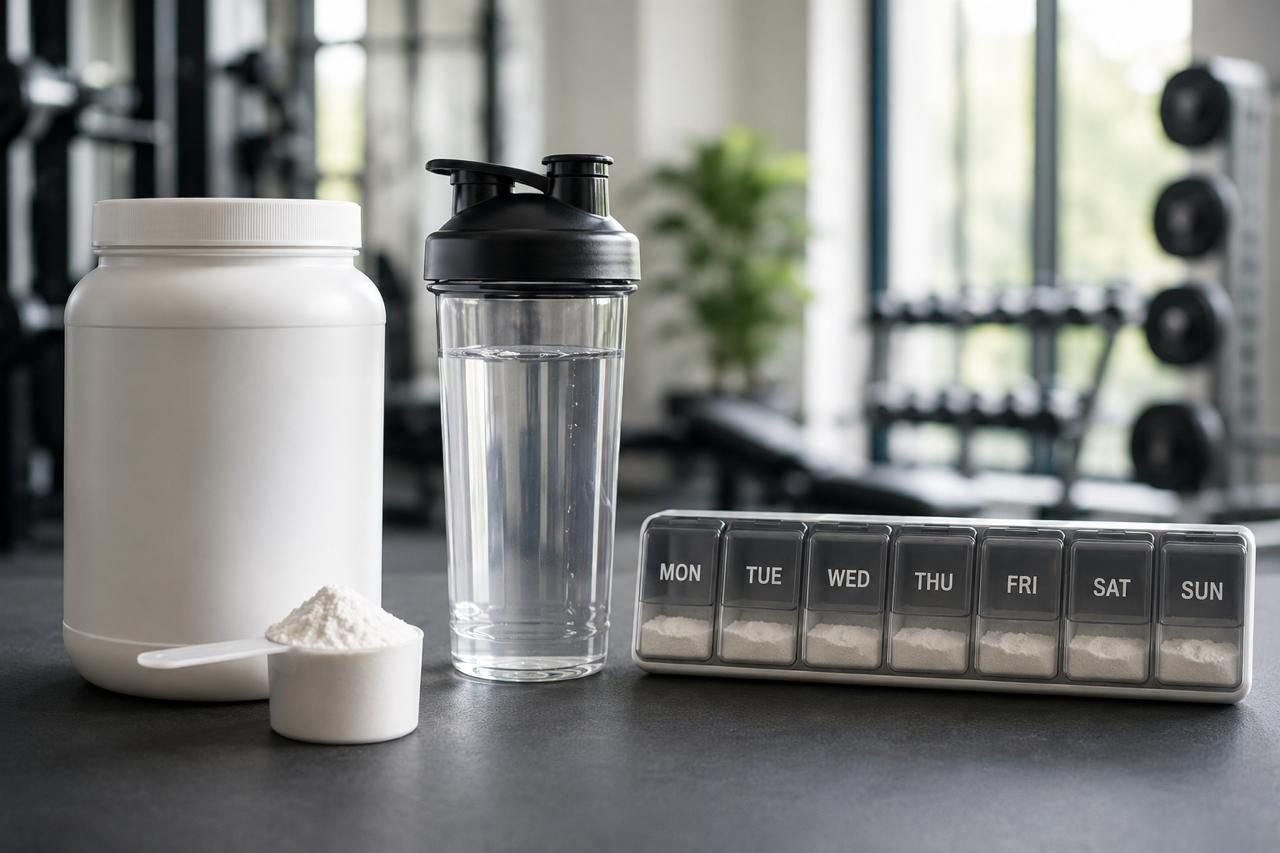
Can You Take Creatine Every Day?
Quick Summary
Yes. Most healthy adults can take creatine monohydrate every day at an evidence-based maintenance dose.
Key points:
- Daily use helps build and maintain elevated muscle creatine stores.
- Most adults use 3–5 grams per day.
- Take creatine on both training and rest days.
- Scheduled breaks or “cycling” are not required.
- Missing one dose is unlikely to affect your progress.
- Long-term research generally supports daily use in healthy adults.
- People with kidney disease or relevant medical conditions should seek professional guidance first.
Daily Creatine Use at a Glance
| Question | Practical answer |
|---|---|
| Can you take creatine every day? | Yes, for most healthy adults |
| Typical maintenance dose | 3–5 g per day |
| Rest days | Continue your usual dose |
| Cycling required? | No |
| Missed one day | Resume normally |
| Main safety exception | Existing kidney disease or relevant medical conditions |
Introduction
Can you take creatine every day? For most healthy adults, the answer is yes.
Creatine works by gradually increasing the amount stored in muscles and other tissues. Maintaining those elevated stores requires regular intake, which is why daily supplementation is the simplest and most reliable approach.
Creatine does not work like caffeine or a traditional pre-workout. You do not need to feel an immediate effect after every serving for it to be useful.
The most common maintenance dose is 3–5 grams of creatine monohydrate per day, including on rest days. Current evidence does not show that healthy adults need scheduled breaks or cycling periods to preserve effectiveness.
This article explains why daily use matters, what happens on rest days, whether long-term supplementation is considered safe and what to expect if you stop or miss a dose.
Why Should You Take Creatine Every Day?
Daily Use Maintains Muscle Creatine Stores
Creatine’s benefits depend on increasing and maintaining the amount stored inside muscle tissue.
Each daily dose contributes to those stores until they approach saturation. After that, a smaller maintenance dose helps replace creatine that is naturally broken down and lost each day.
This is why daily use is more reliable than taking creatine only occasionally.
Regular supplementation may support:
- Repeated high-intensity exercise
- Strength-training performance
- Power output
- Training volume
- Long-term lean-mass gains when combined with resistance training
The International Society of Sports Nutrition describes creatine monohydrate as one of the most extensively studied and effective performance supplements available.
Bottom Line: Daily creatine is not about creating a new effect every morning. It is about keeping muscle creatine stores consistently elevated.
Should You Take Creatine on Rest Days?
Yes. Take your regular dose on rest days.
Your muscles continue storing creatine even when you do not exercise. Skipping non-training days does not immediately empty those stores, but repeatedly doing so may slow saturation or make your routine less consistent.
Rest-day supplementation is simple:
- Take the same maintenance dose
- Use any convenient time
- Pair it with a meal, shake or daily habit
- Do not add an extra serving because you are resting
You do not need to match the time you normally train.
For example, someone who takes creatine after evening workouts can take it with breakfast on a rest day. The change in timing is unlikely to affect results.
Creatine timing matters much less than regular intake. For a focused review of pre- and post-workout use, read Best Time to Take Creatine: Before or After a Workout?
Best Practice: Attach your rest-day dose to a meal you rarely skip. This makes daily adherence easier.
How Much Creatine Should You Take Every Day?
Most healthy adults can use 3–5 grams of creatine monohydrate per day.
This range is practical, well studied and sufficient for maintaining elevated muscle creatine stores in most users.
A simple approach is:
| Situation | Typical daily amount |
|---|---|
| Standard maintenance | 3–5 g |
| After a loading phase | 3–5 g |
| Rest days | 3–5 g |
| Larger or highly muscular adults | Often 5 g; individualized guidance may help |
Three grams may be enough for smaller adults or those who prefer the lower end of the standard range.
Five grams is a convenient default for many recreational athletes and strength trainees.
Higher doses are not automatically more effective. Once muscle stores are elevated, taking extra creatine does not guarantee additional strength or muscle gain.
For a detailed dosing guide, continue with How Much Creatine Should You Take Per Day?
Is It Safe to Take Creatine Every Day Long Term?
What Current Research Suggests
Recommended creatine doses are generally considered well tolerated during long-term use in healthy adults.
Studies and position stands have examined creatine use over months and, in some cases, years without finding consistent evidence of clinically meaningful harm to kidney function in healthy participants.
The key phrase is healthy adults.
Research involving people without kidney disease cannot automatically be applied to those with impaired kidney function, a history of kidney injury or medical conditions requiring careful fluid and medication management.
Professional guidance is appropriate if you:
- Have chronic kidney disease
- Have unexplained kidney-test abnormalities
- Take medications that may affect kidney function
- Have a condition requiring fluid restriction
- Are pregnant or breastfeeding
- Are receiving treatment for a significant chronic condition
Creatine can modestly increase serum creatinine, a marker used to estimate kidney function. This does not automatically indicate kidney damage, but your clinician should know you use creatine when interpreting laboratory results.
For a fuller safety review, read Creatine Side Effects: What Science Really Says.
Important: “Generally safe for healthy adults” does not mean appropriate for every medical situation.
Do You Need to Cycle Creatine?
No. Current evidence does not show that healthy adults need to cycle creatine.
A common gym protocol suggests taking creatine for several weeks, stopping for a month and then restarting. This practice is not supported by strong evidence.
There is no established need to cycle creatine to:
- Restore sensitivity
- Prevent dependence
- Protect healthy kidneys
- Maintain effectiveness
- Allow the body to “reset”
Creatine does not work through the same tolerance mechanism as stimulants such as caffeine.
Once muscle stores are elevated, continuing a maintenance dose helps keep them that way. Scheduled breaks simply allow those stores to decline toward baseline.
You may still choose to stop for practical reasons, such as cost, travel, personal preference or a change in training goals. That is different from needing a physiological “reset.”
Bottom Line: Cycling creatine is optional, not scientifically required.
What Happens If You Stop Taking Creatine?
Muscle Creatine Stores Decline Gradually
Stopping creatine does not cause your muscles to suddenly lose all the creatine they have stored.
Instead, muscle creatine stores slowly return toward their natural baseline over several weeks.
Because this process is gradual:
- Strength does not disappear overnight.
- Muscle mass does not suddenly shrink.
- Athletic performance does not immediately decline.
- Training adaptations you've earned remain.
What usually changes first is the additional water stored inside muscle cells.
Some people notice a small reduction in body weight during the first few weeks after stopping supplementation.
This is expected and should not be confused with muscle loss.
If resistance training and nutrition remain consistent, any decrease in lean tissue is typically much smaller than many people expect.
Did You Know? After supplementation stops, muscle creatine stores generally return to baseline over approximately four to six weeks, although the exact timeline varies among individuals.
What Happens If You Miss One Day?
One Missed Dose Isn't a Problem
Missing one serving is unlikely to have any meaningful effect.
Once muscle creatine stores are elevated, they decline slowly rather than disappearing after 24 hours.
If you forget one day's dose:
- Do not panic.
- Do not double the next serving.
- Simply resume your normal schedule.
Taking extra creatine the following day is unlikely to provide additional benefit and may increase the chance of stomach discomfort.
If you've missed several consecutive days, simply restart your regular maintenance dose.
Only people who have stopped supplementation for several weeks and want to restore saturation more quickly may choose to repeat an optional loading phase.
Best Practice: Focus on your long-term consistency rather than perfect day-to-day adherence.
Can You Take Creatine Every Day Without Working Out?
Yes, But Training Maximizes the Benefits
Creatine can increase muscle creatine stores even if you are not currently exercising.
However, the supplement's best-established benefits occur when it is combined with regular resistance training or other high-intensity exercise.
Without training, creatine may still support:
- Muscle creatine storage
- Cellular energy metabolism
- Certain clinical applications under medical supervision
However, improvements in:
- Strength
- Power
- Sprint performance
- Muscle growth
depend primarily on an appropriate exercise stimulus.
In other words, creatine prepares your muscles to perform better—but exercise is still what creates the adaptation.
People recovering from injury or temporarily unable to train should discuss supplementation with their healthcare professional based on their individual situation.
Common Mistakes With Daily Creatine Use
Several habits reduce the effectiveness of supplementation.
Common mistakes include:
- Taking creatine only on workout days
- Frequently forgetting doses
- Expecting immediate effects
- Taking much larger doses than recommended
- Believing cycling is required
- Stopping after only a few days because "nothing happened"
Creatine works gradually.
The people who benefit most are usually those who make supplementation part of a long-term routine rather than searching for short-term results.
Tip: Keep your creatine beside something you use every morning—such as your coffee maker, protein powder or water bottle—to make daily supplementation automatic.
Fun Fact
Your body naturally produces about 1–2 grams of creatine each day in the liver, kidneys and pancreas. Most of the remaining creatine needed to maximize muscle stores comes from food or supplementation.
Myths vs. Facts
Myth
You should only take creatine on workout days.
Fact
Daily supplementation helps maintain elevated muscle creatine stores, including on rest days.
Myth
You need to cycle creatine.
Fact
Current research does not support routine cycling for healthy adults.
Myth
Stopping creatine immediately causes muscle loss.
Fact
Muscle creatine stores decline gradually, and any early weight loss is mostly water stored inside muscle.
Myth
Missing one serving ruins your progress.
Fact
One missed dose has little practical impact. Resume your normal schedule without doubling your next serving.
Myth
Daily creatine eventually stops working.
Fact
Research has not shown that healthy adults develop tolerance requiring routine cycling.
Myth
Taking more creatine every day produces better results.
Fact
Once muscle stores are saturated, larger doses generally provide no additional performance benefit.
Key Takeaways
- Most healthy adults can safely take creatine monohydrate every day.
- A maintenance dose of 3–5 grams daily is appropriate for most people.
- Continue taking creatine on both workout and rest days.
- Current evidence does not support routine creatine cycling.
- Missing one dose is unlikely to affect muscle creatine stores.
- Stopping creatine gradually reduces muscle creatine stores over several weeks.
- The greatest benefits occur when daily supplementation is combined with regular resistance training.
Conclusion
Can you take creatine every day?
For most healthy adults, the answer is yes. Daily supplementation is the simplest way to maintain elevated muscle creatine stores and support long-term improvements in strength, power and high-intensity exercise performance.
Research does not indicate that healthy adults need to cycle creatine or take regular breaks to maintain its effectiveness. Taking 3–5 grams of creatine monohydrate each day, including on rest days, remains the evidence-based approach for most users.
If you decide to stop taking creatine, muscle creatine stores gradually return toward baseline over several weeks rather than disappearing overnight. Likewise, missing a single serving is unlikely to have any meaningful impact.
To learn how daily supplementation fits into an effective routine, continue with How to Take Creatine: Dosage, Timing & Best Practices.
Continue Learning
- What Is Creatine? A Complete Beginner's Guide
- How to Take Creatine: Dosage, Timing & Best Practices
- How Much Creatine Should You Take Per Day?
- Best Time to Take Creatine: Before or After a Workout?
- Creatine Side Effects: What Science Really Says
Kayvero Tools
- Creatine Calculator
- Water Intake Calculator
- Protein Calculator
Medical Disclaimer
This article is for educational purposes only and should not replace personalized medical advice. Consult a qualified healthcare professional before using creatine if you have a medical condition, take prescription medications, are pregnant, breastfeeding or have concerns about kidney function.
Scientific References
Kreider RB, Kalman DS, Antonio J, et al. International Society of Sports Nutrition Position Stand: Safety and Efficacy of Creatine Supplementation in Exercise, Sport, and Medicine. Journal of the International Society of Sports Nutrition.
Antonio J, Candow DG, Forbes SC, et al. Common Questions and Misconceptions About Creatine Supplementation: What Does the Scientific Evidence Really Show? Journal of the International Society of Sports Nutrition.
Kreider RB, Stout JR. Creatine in Health and Disease. Nutrients.
National Institutes of Health. Dietary Supplements for Exercise and Athletic Performance.
European Food Safety Authority. Scientific Opinion on Creatine and High-Intensity Exercise Performance.
International Olympic Committee. Consensus Statement on Dietary Supplements and the High-Performance Athlete.
Frequently asked questions
- Can you take creatine every day?
Yes. Most healthy adults can take creatine monohydrate every day at an evidence-based maintenance dose. Daily use helps build and maintain elevated muscle creatine stores.
- Should you take creatine on rest days?
Yes. Continue taking your regular dose on rest days because creatine works through gradual muscle saturation rather than an immediate pre-workout effect.
- Is it safe to take creatine every day long term?
Research indicates that recommended creatine doses are generally well tolerated during long-term use in healthy adults. People with kidney disease or relevant medical conditions should seek professional guidance first.
- How much creatine should you take every day?
Most healthy adults use 3–5 grams of creatine monohydrate per day. A personalized estimate may account for body size, training demands and individual tolerance.
- Do you need to cycle creatine?
No. Current evidence does not show that healthy adults need scheduled breaks to preserve effectiveness or prevent the body from becoming dependent on creatine.
- What happens if you stop taking creatine?
Muscle creatine stores gradually return toward baseline over several weeks. You do not suddenly lose all the muscle or strength gained while training.
- What happens if you miss one day of creatine?
Missing one day is unlikely to have a noticeable effect because muscle creatine stores decline gradually. Resume your usual dose without doubling the next serving.
- Can you take creatine every day without working out?
Creatine can still increase tissue creatine stores without exercise, but its best-established performance and muscle benefits occur when supplementation is combined with appropriate training.
Continue learning
- How Much Creatine Should You Take Per Day?Most healthy adults only need 3–5 grams of creatine monohydrate per day. A loading phase is optional and simply helps saturate muscles more quickly. Larger athletes may benefit from maintenance doses at the upper end of the recommended rangRead article
- Creatine vs Whey Protein: Which Should You Take?Creatine and whey protein serve different purposes and are not direct competitors. Whey protein helps you meet your daily protein needs and supports muscle recovery. Creatine improves highintensity exercise performance by increasing muscle Read article
- How to Take Creatine: Dosage, Timing & Best PracticesCreatine is one of the most effective and wellresearched sports supplements available—but many people still wonder how to take it correctly.Read article
- Creatine Benefits: What Science Really SaysCreatine is one of the most extensively researched sports supplements available.Read article
Related calculators
- Creatine CalculatorOpen calculator
- Water Intake CalculatorOpen calculator
- Protein CalculatorOpen calculator
- Calorie calculatorYour daily calorie target in seconds.Open calculator
- Macro calculatorSplit protein, carbs and fat for your goal.Open calculator
- Meal plannerBuild meals with real nutrition data.Open calculator
- Food databaseNutrition facts for thousands of foods.Open calculator
Recommended products


