Supplements
Creatine vs Whey Protein: Which Should You Take?
Creatine and whey protein serve different purposes and are not direct competitors. Whey protein helps you meet your daily protein needs and supports muscle recovery. Creatine improves highintensity exercise performance by increasing muscle
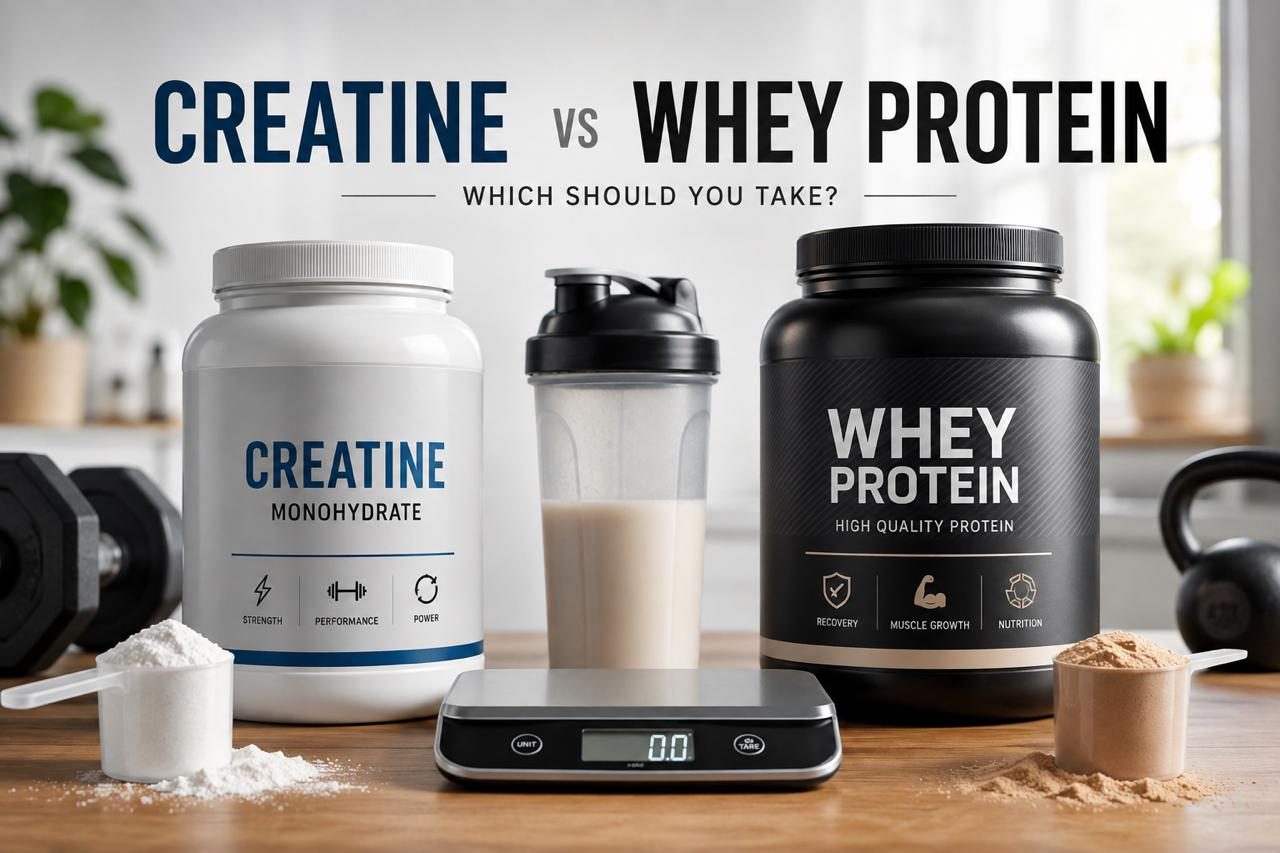
Creatine vs Whey Protein: Which Should You Take?
Quick Summary
- Creatine and whey protein serve different purposes and are not direct competitors.
- Whey protein helps you meet your daily protein needs and supports muscle recovery.
- Creatine improves high-intensity exercise performance by increasing muscle energy stores.
- Many people benefit from taking both supplements together.
- The better choice depends on your diet, training goals, and current protein intake.
Featured Snippet Box
| Question | Evidence-Based Answer |
|---|---|
| Which builds muscle better? | Both support muscle growth through different mechanisms. |
| Which improves strength? | Creatine has the strongest evidence for increasing strength and power. |
| Which helps recovery? | Whey protein supports muscle repair after training. |
| Can you take both together? | Yes. They complement each other. |
| Should beginners choose one? | Prioritize whey if protein intake is low; add creatine for performance. |
| Best overall choice | Many active adults benefit from using both. |
Introduction
If you're trying to decide between creatine and whey protein, the answer is surprisingly simple: they aren't competing supplements. Instead, they serve different roles in supporting muscle growth, strength, and athletic performance.
Whey protein provides the essential amino acids your muscles need to recover and grow after exercise. Creatine, on the other hand, increases the amount of rapidly available energy inside your muscles, helping you perform more repetitions, lift heavier weights, and train at a higher intensity.
Because they work through completely different mechanisms, many people benefit from taking both rather than choosing one over the other.
This article compares creatine and whey protein, explains how each supplement works, highlights their unique benefits, and helps you determine which option—or combination—is best for your goals.
What's the Difference Between Creatine and Whey Protein?
The biggest difference is what each supplement provides.
Whey protein is a complete protein derived from milk. It supplies all nine essential amino acids your body needs to build and repair muscle tissue after exercise.
Creatine is a naturally occurring compound stored primarily inside skeletal muscle. Rather than providing protein, it helps regenerate ATP, the molecule your muscles use for rapid energy during short, high-intensity activities.
In simple terms:
| Creatine | Whey Protein |
|---|---|
| Supports rapid energy production | Supplies amino acids for muscle repair |
| Improves strength and power | Supports muscle protein synthesis |
| Increases muscle creatine stores | Helps meet daily protein requirements |
| Not a source of calories or protein | Contains protein and calories |
Although both supplements support muscle growth, they do so in very different ways.
Bottom Line:
Whey protein helps build muscle by providing the raw materials for recovery, while creatine helps you train harder by increasing your muscles' ability to produce energy.
Which Supplement Is Better for Muscle Growth?
Neither supplement is inherently better because muscle growth depends on several factors.
Your muscles need enough dietary protein to repair and build new tissue after training. If you don't consume enough protein, muscle growth may be limited regardless of how hard you train.
That's where whey protein can be valuable.
Creatine supports muscle growth differently.
Rather than directly stimulating muscle protein synthesis, it allows you to perform more total work during resistance training. Over weeks and months, that greater training volume contributes to larger improvements in strength and lean muscle mass.
Research consistently shows that combining resistance training with creatine supplementation leads to greater gains in muscle size and strength than resistance training alone.
For many people, the best strategy isn't choosing one supplement over the other—it's ensuring adequate protein intake while using creatine to maximize training performance.
Important:
Whey protein supports recovery. Creatine supports performance. Together, they address two different parts of the muscle-building process.
Which Supplement Is Better for Strength and Performance?
Creatine has a clear advantage when your primary goal is improving strength, power, and high-intensity exercise performance.
By increasing muscle phosphocreatine stores, creatine helps regenerate ATP more quickly. This allows you to perform repeated short bursts of intense activity with less fatigue.
Research consistently associates creatine supplementation with improvements in:
- Maximum strength
- Power output
- Sprint performance
- Training volume
- Resistance training adaptations
Whey protein also contributes to long-term performance by supporting muscle recovery and repair, but it does not directly increase your muscles' ability to produce energy during exercise.
If lifting heavier weights, improving explosive power, or maximizing gym performance is your priority, creatine has the strongest scientific support.
Best Practice:
Creatine is the better choice for increasing training performance, while whey protein helps your body recover from that training.
Which Supplement Is Better for Recovery?
When recovery is the primary concern, whey protein generally has the advantage.
Resistance training creates microscopic damage to muscle fibers. Recovery depends on providing enough dietary protein—particularly essential amino acids—to repair and rebuild that tissue.
Whey protein is especially effective because it:
- Contains all essential amino acids
- Is naturally rich in leucine, the amino acid that triggers muscle protein synthesis
- Is rapidly digested and absorbed
- Makes it easier to reach daily protein targets
Creatine also plays a role in recovery.
Some research suggests creatine may help reduce exercise-induced muscle damage and improve recovery between repeated high-intensity training sessions. However, these effects are generally smaller and less consistent than whey protein's role in supporting muscle repair.
If your daily protein intake is already adequate through whole foods, adding whey protein may offer little additional benefit. If you're consistently falling short of your protein target, however, whey protein can be an effective and convenient solution.
Can You Take Creatine and Whey Protein Together?
Yes.
Current evidence indicates that taking creatine and whey protein together is both safe and effective for healthy adults.
Because they work through different physiological mechanisms, combining them allows you to benefit from both supplements simultaneously.
Many people simply mix creatine into their post-workout protein shake for convenience.
Taking both together may help support:
- Greater strength gains
- Increased lean muscle mass
- Improved training capacity
- Better recovery after exercise
- Easier daily supplement adherence
Importantly, mixing creatine with whey protein does not reduce the effectiveness of either supplement.
Bottom Line:
Creatine and whey protein complement one another. For many physically active people, using both is more beneficial than choosing only one.
Which Supplement Should Beginners Choose?
The answer depends on what's missing from your current nutrition.
If you struggle to consume enough protein each day, whey protein is usually the better first investment because meeting your daily protein requirements is essential for muscle growth and recovery.
On the other hand, if your protein intake is already sufficient through whole foods, adding creatine may provide greater improvements in strength and exercise performance.
A simple approach looks like this:
| Your Situation | Best Choice |
|---|---|
| Low daily protein intake | Whey protein |
| Protein intake already adequate | Creatine |
| Goal is maximum strength | Creatine |
| Goal is easier recovery | Whey protein |
| Goal is muscle growth and performance | Both together |
For many recreational lifters, the ideal long-term strategy is not choosing between the two—but using each supplement for the purpose it was designed to serve.
If you're new to creatine supplementation, How Much Creatine Should You Take Per Day? explains the recommended daily dosage and whether a loading phase is necessary.
Are Creatine and Whey Protein Safe?
Yes.
Both creatine monohydrate and whey protein have been extensively studied and are generally considered safe for healthy adults when consumed at recommended amounts.
Creatine has one of the strongest safety records among sports supplements, with decades of research supporting its long-term use.
Whey protein is simply a convenient source of high-quality dietary protein and is safe for most people who tolerate dairy.
Certain individuals should seek medical advice before using either supplement, including those with:
- Kidney disease
- Milk allergy (for whey protein)
- Pregnancy or breastfeeding
- Specific medical conditions requiring dietary modifications
For healthy individuals, both supplements can safely be included as part of a balanced diet and regular exercise program.
Important:
Supplements work best when they support—not replace—a nutritious diet, progressive training program, adequate sleep, and consistent recovery habits.
Key Takeaways
- Creatine and whey protein are not competing supplements—they support muscle growth through different mechanisms.
- Whey protein helps you meet your daily protein needs and promotes muscle repair after exercise.
- Creatine improves strength, power, and high-intensity exercise performance by increasing muscle energy stores.
- If your protein intake is low, whey protein should usually be your first priority.
- If you already consume enough protein, creatine is often the next supplement to consider.
- Many active adults benefit from taking both supplements together because they complement each other.
- Neither supplement replaces a balanced diet or a well-designed resistance training program.
Conclusion
When comparing creatine vs whey protein, there isn't a single winner because they serve different purposes.
Whey protein provides the amino acids your muscles need to recover and grow, making it an excellent choice if you're struggling to reach your daily protein intake. Creatine improves your muscles' ability to produce energy during high-intensity exercise, helping you train harder and gain strength over time.
For many healthy, physically active adults, the most effective strategy isn't choosing one supplement over the other—it's using each for its intended purpose. Meeting your daily protein needs and consistently taking creatine can work together to support long-term improvements in muscle growth, performance, and recovery.
If you're considering adding creatine to your routine, How Much Creatine Should You Take Per Day? explains the evidence-based dosage and whether a loading phase is necessary.
Continue Learning
- What Is Creatine and How Does It Work?
- How Much Creatine Should You Take Per Day?
- Best Time to Take Creatine
- Should You Take Creatine Every Day?
- Creatine Loading Phase Explained
Kayvero Tools
- Protein Calculator
- Creatine Calculator
- Calorie Calculator
- Water Intake Calculator
Medical Disclaimer
This article is intended for educational purposes only and should not replace personalized medical advice. If you have an underlying medical condition, are pregnant or breastfeeding, or have concerns about using dietary supplements, consult a qualified healthcare professional before starting creatine, whey protein, or any new supplement.
Scientific References
Kreider RB, Antonio J, Candow DG, et al. International Society of Sports Nutrition Position Stand: Creatine Supplementation in Exercise, Sport, and Medicine. Journal of the International Society of Sports Nutrition. 2022.
Jäger R, Kerksick CM, Campbell BI, et al. International Society of Sports Nutrition Position Stand: Protein and Exercise. Journal of the International Society of Sports Nutrition. 2017.
Morton RW, Murphy KT, McKellar SR, et al. A Systematic Review, Meta-analysis and Meta-regression of the Effect of Protein Supplementation on Resistance Training–Induced Gains in Muscle Mass and Strength in Healthy Adults. British Journal of Sports Medicine. 2018.
Antonio J, Candow DG, Forbes SC, et al. Common Questions and Misconceptions About Creatine Supplementation: What Does the Scientific Evidence Really Show? Journal of the International Society of Sports Nutrition. 2021.
Cermak NM, Res PT, de Groot LCPGM, et al. Protein Supplementation Augments the Adaptive Response of Skeletal Muscle to Resistance-Type Exercise Training: A Meta-analysis. The American Journal of Clinical Nutrition. 2012.
Candow DG, Forbes SC, Chilibeck PD, Cornish SM, Antonio J, Kreider RB. Effectiveness of Creatine Supplementation on Aging Muscle and Bone: Focus on Falls Prevention and Inflammation. Journal of Clinical Medicine. 2019.
Phillips SM, Van Loon LJC. Dietary Protein for Athletes: From Requirements to Optimum Adaptation. Journal of Sports Sciences. 2011.
EFSA Panel on Dietetic Products, Nutrition and Allergies (NDA). Scientific Opinion on the Substantiation of Health Claims Related to Creatine and Improvement of Physical Performance During Successive Bursts of Short-Term, High-Intensity Exercise. EFSA Journal. 2011.
Frequently asked questions
- What's the difference between creatine and whey protein?
Creatine helps your muscles produce energy during short, high-intensity exercise, while whey protein provides the amino acids needed to build and repair muscle tissue. They work through different mechanisms and complement rather than replace each other.
- Should I take creatine or whey protein first?
Neither supplement is inherently better than the other. If your daily protein intake is insufficient, prioritizing whey protein may be more beneficial. If you already meet your protein needs, adding creatine can further improve strength and performance.
- Can you take creatine and whey protein together?
Yes. Creatine and whey protein can safely be taken together, and many people mix them in the same shake. Research suggests they complement each other because they support different aspects of muscle performance and recovery.
- Is creatine better than whey protein for muscle growth?
Neither supplement is universally better. Whey protein supports muscle protein synthesis by supplying essential amino acids, while creatine helps improve training performance, allowing greater long-term strength and muscle gains.
- Do beginners need both creatine and whey protein?
Not necessarily. Beginners who struggle to meet their protein needs may benefit more from whey protein first. Creatine can then be added to further support strength and training performance.
- Can creatine replace whey protein?
No. Creatine is not a protein source and cannot replace dietary protein or whey protein. Each supplement serves a different purpose.
- Can whey protein replace creatine?
No. Whey protein provides amino acids for muscle repair and growth but does not increase muscle creatine stores or improve rapid energy production during high-intensity exercise.
- Is it safe to take creatine and whey protein every day?
Current evidence indicates that both supplements are safe for healthy adults when used at recommended dosages as part of a balanced diet and exercise program.
Continue learning
- Can You Take Creatine Every Day?Yes. Most healthy adults can take creatine monohydrate every day at an evidencebased maintenance dose.Read article
- How Much Creatine Should You Take Per Day?Most healthy adults only need 3–5 grams of creatine monohydrate per day. A loading phase is optional and simply helps saturate muscles more quickly. Larger athletes may benefit from maintenance doses at the upper end of the recommended rangRead article
- How to Take Creatine: Dosage, Timing & Best PracticesCreatine is one of the most effective and wellresearched sports supplements available—but many people still wonder how to take it correctly.Read article
- Creatine Benefits: What Science Really SaysCreatine is one of the most extensively researched sports supplements available.Read article
Related calculators
- Protein CalculatorOpen calculator
- Creatine CalculatorOpen calculator
- Calorie CalculatorOpen calculator
- Water Intake CalculatorOpen calculator
- Calorie calculatorYour daily calorie target in seconds.Open calculator
- Macro calculatorSplit protein, carbs and fat for your goal.Open calculator
- Meal plannerBuild meals with real nutrition data.Open calculator
- Food databaseNutrition facts for thousands of foods.Open calculator
Recommended products


