Supplements
How Much Creatine Should You Take Per Day?
Most healthy adults only need 3–5 grams of creatine monohydrate per day. A loading phase is optional and simply helps saturate muscles more quickly. Larger athletes may benefit from maintenance doses at the upper end of the recommended rang
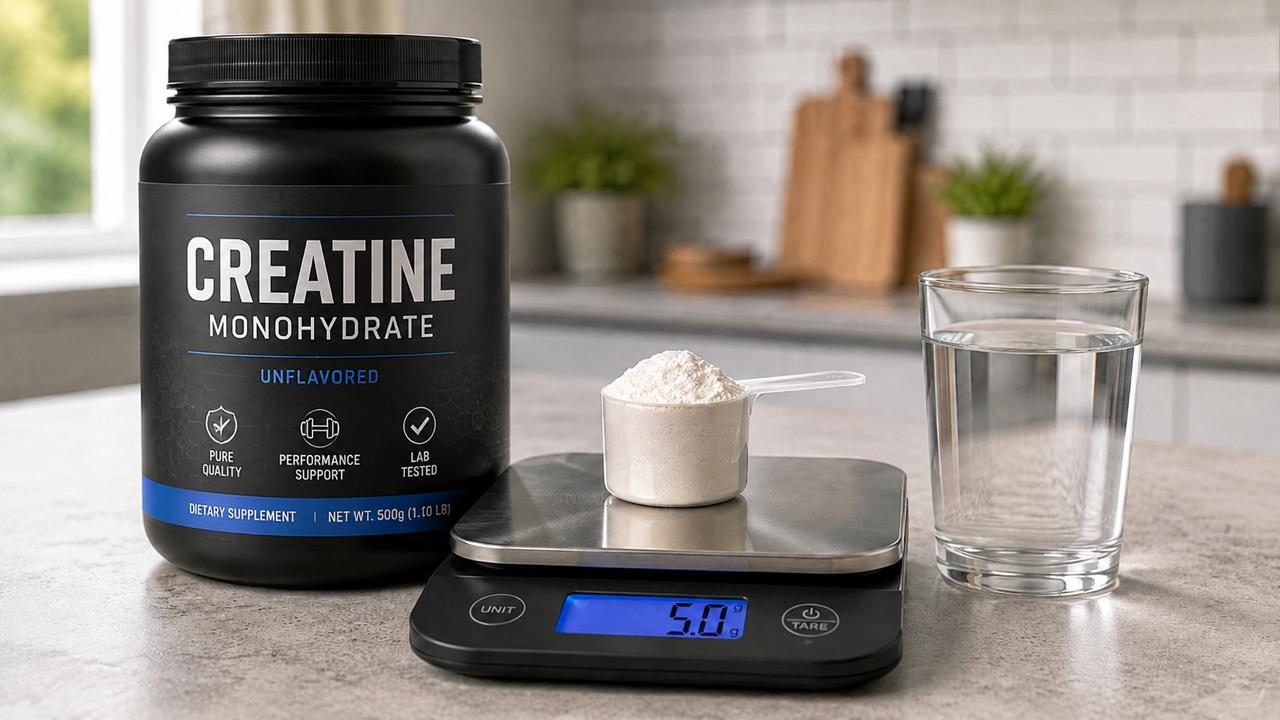
How Much Creatine Should You Take Per Day?
Quick Summary
- Most healthy adults only need 3–5 grams of creatine monohydrate per day.
- A loading phase is optional and simply helps saturate muscles more quickly.
- Larger athletes may benefit from maintenance doses at the upper end of the recommended range.
- Consistent daily use matters far more than the exact timing of your dose.
- Taking more than necessary does not usually improve results once muscle stores are full.
Featured Snippet Box
| Question | Answer |
|---|---|
| Recommended daily dose | 3–5 g per day |
| Loading phase | Optional: 20 g/day for 5–7 days |
| Maintenance after loading | 3–5 g/day |
| Does body weight matter? | Slightly, mainly for very muscular individuals |
| Best form | Creatine monohydrate |
| Daily use required? | Yes, for best long-term results |
Introduction
For most healthy adults, the ideal creatine dose is 3–5 grams of creatine monohydrate per day. Research consistently shows that this amount is enough to keep muscle creatine stores elevated, supporting improvements in strength, power, exercise performance, and lean muscle gains when combined with regular resistance training.
The right dosage can vary slightly depending on factors such as body size, muscle mass, dietary habits, and whether you choose to begin with a loading phase. Even so, most people do not need large amounts of creatine to experience its proven benefits.
This article explains how much creatine you should take each day, when higher doses may be appropriate, whether body weight changes the recommendation, and how to build an effective supplementation routine based on current scientific evidence.
How Much Creatine Should You Take Per Day?
For nearly all healthy adults, 3–5 grams of creatine monohydrate per day is the evidence-based recommendation.
Decades of research have shown that this daily amount is sufficient to maintain elevated muscle creatine stores after they have reached saturation. Once those stores are full, consistently taking a maintenance dose is more important than increasing the amount.
Creatine helps muscles regenerate energy more rapidly during short, high-intensity exercise by increasing phosphocreatine availability. This allows your body to produce ATP—the primary energy source for muscle contractions—more efficiently during repeated efforts such as weightlifting, sprinting, and jumping.
Although individual needs vary slightly, the standard recommendation works well for the overwhelming majority of active adults.
Bottom Line:
If you're unsure how much creatine to take, 3–5 grams of creatine monohydrate every day is the dosage supported by the strongest scientific evidence.
Does Body Weight Affect Creatine Dosage?
Yes, but usually less than many people expect.
People with more lean muscle mass can store more creatine, which means larger athletes may benefit from maintenance doses toward the upper end of the recommended range. Even so, 3–5 grams per day remains effective for most adults regardless of body weight.
A practical guideline looks like this:
| Body Weight | Suggested Daily Maintenance Dose |
|---|---|
| Under 60 kg (132 lb) | Around 3 g |
| 60–90 kg (132–198 lb) | 3–5 g |
| Over 90 kg (198 lb) | Around 5 g |
| Elite strength athletes with very high muscle mass | Up to 5–10 g when appropriate |
These recommendations are practical rather than absolute. Factors such as total muscle mass, training volume, and individual response are often more important than body weight alone.
Should You Calculate Creatine Based on Body Weight?
Some research uses weight-based formulas, typically around 0.03 grams per kilogram of body weight per day for maintenance.
For example:
- 60 kg (132 lb): approximately 1.8 g/day
- 75 kg (165 lb): approximately 2.3 g/day
- 90 kg (198 lb): approximately 2.7 g/day
In real-world practice, however, sports nutrition experts continue recommending a simple 3–5 gram daily dose because it reliably maintains muscle creatine stores in almost everyone.
Unless you're an exceptionally large athlete or have unusually high muscle mass, calculating your dose by body weight is usually unnecessary.
Important:
Muscle mass—not body weight alone—is the biggest factor influencing total creatine storage.
Do You Need a Creatine Loading Phase?
No.
A loading phase is completely optional.
Its purpose is simply to increase muscle creatine stores faster, allowing you to experience the supplement's benefits sooner.
The traditional loading protocol consists of:
| Phase | Daily Dose | Duration |
|---|---|---|
| Loading | 20 g (divided into four 5 g doses) | 5–7 days |
| Maintenance | 3–5 g | Ongoing |
Studies consistently show that this approach saturates muscle creatine stores within about one week.
Without loading, taking 3–5 grams daily achieves nearly identical muscle creatine levels after approximately three to four weeks.
The long-term results are essentially the same. The only meaningful difference is how quickly saturation occurs.
Who Might Benefit From Loading?
A loading phase may be useful if you:
- Are preparing for a competition.
- Want faster improvements in high-intensity performance.
- Have just started resistance training and want to maximize early adaptations.
For recreational exercisers, there is little downside to simply beginning with a maintenance dose.
Best Practice:
Loading is optional. If you're not in a hurry, taking 3–5 grams every day is a simple, effective strategy supported by decades of research.
Is Taking More Than 5 Grams Better?
Usually not.
Once your muscles are saturated with creatine, taking larger daily amounts has not been consistently shown to improve strength, muscle growth, or athletic performance.
Any excess creatine that cannot be stored is gradually converted into creatinine and eliminated by the body.
This means increasing your daily intake from 5 grams to 10 or 15 grams generally adds cost rather than measurable benefits.
There are a few exceptions.
Individuals with exceptionally high lean body mass or unusually demanding training schedules may benefit from maintenance doses closer to 5–10 grams per day, particularly if they perform multiple intense training sessions daily.
Even in these situations, the goal is to match greater muscle mass—not to assume that more creatine always produces better results.
Bottom Line:
More creatine does not equal more muscle. Consistent supplementation within the recommended range is what produces long-term benefits.
Should You Take Creatine Every Day?
Yes.
Creatine works by gradually increasing and maintaining muscle creatine stores over time.
Unlike caffeine or many pre-workout ingredients, its benefits do not depend on taking it immediately before exercise.
Instead, regular daily intake allows your muscles to remain saturated, supporting consistent improvements in training performance.
Taking creatine every day may help support:
- Increased strength
- Better power output
- Improved performance during repeated high-intensity exercise
- Greater lean muscle gains when combined with resistance training
- Faster recovery between intense training sessions
Current evidence suggests that the exact time of day matters much less than taking creatine consistently.
Whether you take it with breakfast, lunch, dinner, or after training, maintaining your daily routine is the most important factor.
Tip:
Pair your creatine with an existing daily habit—such as breakfast or your post-workout shake—to make consistency effortless.
Does Your Diet Change How Much Creatine You Need?
Usually not.
Whether you eat meat or follow a vegetarian or vegan diet, the standard recommendation of 3–5 grams of creatine monohydrate per day remains appropriate for most healthy adults.
The main difference is your starting point.
People who regularly eat meat and fish naturally consume small amounts of creatine through their diet, while vegetarians and vegans typically begin with lower muscle creatine stores.
Because of this, plant-based eaters often experience a greater increase in muscle creatine after supplementation. That larger response doesn't necessarily mean they need a larger daily dose.
Natural Food Sources of Creatine
Although creatine occurs naturally in several animal foods, the amounts are relatively small compared with supplemental doses.
| Food | Approximate Creatine Content |
|---|---|
| Herring | 6–10 g per kg |
| Beef | 4–5 g per kg |
| Pork | 4–5 g per kg |
| Salmon | 4–5 g per kg |
| Tuna | 3–4 g per kg |
To consume the equivalent of a typical 5-gram supplement, most people would need to eat well over one kilogram of meat or fish in a single day.
For that reason, supplementation is by far the most practical way to increase muscle creatine stores.
If you'd like to understand how creatine works inside the body, see What Is Creatine and How Does It Work?
What Happens If You Miss a Day?
Missing a single day is unlikely to make any noticeable difference.
Creatine works by maintaining elevated muscle stores over time, not by producing immediate effects after each serving.
Those stores decline gradually rather than disappearing overnight.
If you forget a dose:
- Simply resume your normal schedule the following day.
- Do not double your next serving.
- Focus on returning to consistent daily use.
Occasionally missing one serving won't erase your progress, but regularly skipping several days can gradually reduce muscle creatine levels.
Important:
Consistency over weeks and months matters far more than taking creatine at the exact same time every day.
Can You Take Too Much Creatine?
Yes, although taking more than the recommended amount is unlikely to improve results.
Creatine monohydrate has one of the strongest safety records of any sports supplement. Long-term studies in healthy adults have not shown harmful effects on kidney or liver function when recommended doses are used.
Higher doses are more likely to increase the chance of mild digestive side effects than to improve performance.
Possible side effects include:
- Stomach discomfort
- Temporary bloating
- Diarrhea
- Mild nausea
- Water retention during the loading phase
People with existing kidney disease or other significant medical conditions should speak with a qualified healthcare professional before starting creatine supplementation.
Does the Type of Creatine Change the Recommended Dose?
Not for most people.
The overwhelming majority of scientific research has been conducted using creatine monohydrate, making it the benchmark for effectiveness and safety.
Other forms—including creatine hydrochloride (HCl), buffered creatine, creatine nitrate, and creatine ethyl ester—are often marketed as requiring smaller doses or offering superior absorption.
Current evidence has not consistently demonstrated meaningful advantages over creatine monohydrate.
For nearly everyone, 3–5 grams of creatine monohydrate per day remains the simplest, most effective, and most economical choice.
If you're unsure which product to choose, Creatine Loading Phase Explained and Best Time to Take Creatine provide additional guidance on getting the most from supplementation.
Fun Fact
Your muscles can only store a limited amount of creatine. Once those stores are full, taking larger daily doses won't continue increasing them—one reason why moderate, consistent supplementation is so effective.
Myths vs. Facts
Myth
You need 10–20 grams of creatine every day to build muscle.
Fact
Most healthy adults maintain full muscle creatine stores with just 3–5 grams per day after the optional loading phase.
Myth
Missing one day completely eliminates creatine's benefits.
Fact
Muscle creatine stores decline gradually, so an occasional missed dose has little practical effect.
Myth
More creatine always produces better results.
Fact
Once muscle stores are saturated, higher daily doses have not consistently been shown to improve performance or muscle growth.
Myth
Creatine only benefits bodybuilders.
Fact
Research supports creatine supplementation across many physically active populations, including recreational exercisers, older adults, and athletes participating in a wide variety of sports.
Myth
More expensive forms of creatine work better.
Fact
Creatine monohydrate remains the most thoroughly researched form and continues to be the evidence-based standard.
Key Takeaways
- Most healthy adults only need 3–5 grams of creatine monohydrate per day.
- A loading phase is optional and mainly helps saturate muscle creatine stores more quickly.
- Body weight has some influence on dosage, but muscle mass is usually the more important factor.
- Taking more than the recommended maintenance dose is unlikely to provide additional performance benefits.
- Consistent daily supplementation matters much more than the exact time you take creatine.
- Creatine monohydrate remains the most researched, effective, and cost-effective form of creatine.
- Long-term research supports the safety of recommended creatine doses in healthy adults.
Conclusion
For nearly everyone, the answer is simple: 3–5 grams of creatine monohydrate per day is enough to maximize the supplement's proven benefits.
While a loading phase can help saturate your muscles more quickly, it isn't necessary. Consistent daily use is what keeps muscle creatine stores elevated and supports long-term improvements in strength, power, and training performance.
If you're just getting started, keep your routine simple. Choose a high-quality creatine monohydrate supplement, take it every day, and stay consistent. Most people don't need complicated dosing strategies to see results.
To learn more about how creatine works inside the body and why it improves exercise performance, continue with What Is Creatine and How Does It Work?
Continue Learning
- What Is Creatine and How Does It Work?
- Best Time to Take Creatine
- Should You Take Creatine Every Day?
- Creatine Loading Phase Explained
- How Long Does Creatine Take to Work?
Kayvero Tools
- Creatine Calculator
- Protein Calculator
- Water Intake Calculator
- Calorie Calculator
Medical Disclaimer
This article is intended for educational purposes only and should not replace individualized medical advice. If you have kidney disease, are pregnant or breastfeeding, take prescription medications, or have another underlying medical condition, consult a qualified healthcare professional before using creatine or any dietary supplement.
Scientific References
Kreider RB, Kalman DS, Antonio J, et al. International Society of Sports Nutrition Position Stand: Safety and Efficacy of Creatine Supplementation in Exercise, Sport, and Medicine. Journal of the International Society of Sports Nutrition. 2017.
Kreider RB, Antonio J, Candow DG, et al. International Society of Sports Nutrition Position Stand: Creatine Supplementation in Exercise, Sport, and Medicine. Journal of the International Society of Sports Nutrition. 2022.
Candow DG, Forbes SC, Chilibeck PD, Cornish SM, Antonio J, Kreider RB. Effectiveness of Creatine Supplementation on Aging Muscle and Bone: Focus on Falls Prevention and Inflammation. Journal of Clinical Medicine. 2019.
Chilibeck PD, Kaviani M, Candow DG, Zello GA. Effect of Creatine Supplementation During Resistance Training on Lean Tissue Mass and Muscular Strength in Older Adults: A Meta-analysis. Open Access Journal of Sports Medicine. 2017.
Branch JD. Effect of Creatine Supplementation on Body Composition and Performance: A Meta-analysis. International Journal of Sport Nutrition and Exercise Metabolism. 2003.
Persky AM, Brazeau GA. Clinical Pharmacology of the Dietary Supplement Creatine Monohydrate. Pharmacological Reviews. 2001.
Antonio J, Candow DG, Forbes SC, et al. Common Questions and Misconceptions About Creatine Supplementation: What Does the Scientific Evidence Really Show? Journal of the International Society of Sports Nutrition. 2021.
EFSA Panel on Dietetic Products, Nutrition and Allergies (NDA). Scientific Opinion on the Substantiation of Health Claims Related to Creatine and Improvement of Physical Performance During Successive Bursts of Short-Term, High-Intensity Exercise. EFSA Journal. 2011.
Frequently asked questions
- How much creatine should you take per day?
Most healthy adults benefit from taking 3–5 grams of creatine monohydrate per day. This amount is sufficient to maintain elevated muscle creatine stores and support improvements in strength, power, and exercise performance.
- Is 5 grams of creatine enough?
Yes. For most people, 5 grams per day is enough to maximize the benefits of creatine supplementation. Individuals with significantly greater muscle mass may sometimes require slightly higher maintenance doses.
- Do you need a creatine loading phase?
No. A loading phase is optional. Taking 20 grams per day for 5–7 days, divided into four doses, saturates muscle creatine stores more quickly, but taking 3–5 grams daily reaches similar levels after several weeks.
- Should you take creatine every day?
Yes. Creatine works best when taken consistently every day because its benefits depend on maintaining elevated muscle creatine stores over time rather than producing immediate effects.
- Can you take too much creatine?
Taking more than the recommended amount is unlikely to improve performance once your muscles are saturated. Excessive intake may increase the risk of mild digestive discomfort without providing additional benefits.
- Does body weight affect creatine dosage?
Body weight and muscle mass can influence creatine needs. While 3–5 grams per day is appropriate for most adults, larger athletes may benefit from maintenance doses closer to 5–10 grams daily.
- Is creatine safe for long-term use?
Current evidence indicates that creatine monohydrate is safe for long-term use in healthy adults when taken at recommended dosages. Long-term studies have not demonstrated harmful effects on kidney or liver function in healthy individuals.
- What is the best type of creatine?
Creatine monohydrate is the most extensively researched form of creatine. It consistently demonstrates effectiveness, has an excellent safety profile, and offers the best value compared with alternative forms.
Continue learning
- Can You Take Creatine Every Day?Yes. Most healthy adults can take creatine monohydrate every day at an evidencebased maintenance dose.Read article
- Creatine vs Whey Protein: Which Should You Take?Creatine and whey protein serve different purposes and are not direct competitors. Whey protein helps you meet your daily protein needs and supports muscle recovery. Creatine improves highintensity exercise performance by increasing muscle Read article
- How to Take Creatine: Dosage, Timing & Best PracticesCreatine is one of the most effective and wellresearched sports supplements available—but many people still wonder how to take it correctly.Read article
- Creatine Benefits: What Science Really SaysCreatine is one of the most extensively researched sports supplements available.Read article
Related calculators
- Creatine CalculatorOpen calculator
- Protein CalculatorOpen calculator
- Water Intake CalculatorOpen calculator
- Calorie CalculatorOpen calculator
- Calorie calculatorYour daily calorie target in seconds.Open calculator
- Macro calculatorSplit protein, carbs and fat for your goal.Open calculator
- Meal plannerBuild meals with real nutrition data.Open calculator
- Food databaseNutrition facts for thousands of foods.Open calculator
Recommended products


