Supplements
Is Creatine Safe? What the Science Really Says
Creatine monohydrate is one of the most extensively studied sports supplements available. Current evidence indicates that creatine is safe for healthy adults when taken at recommended dosages. Research has not shown that creatine damages he
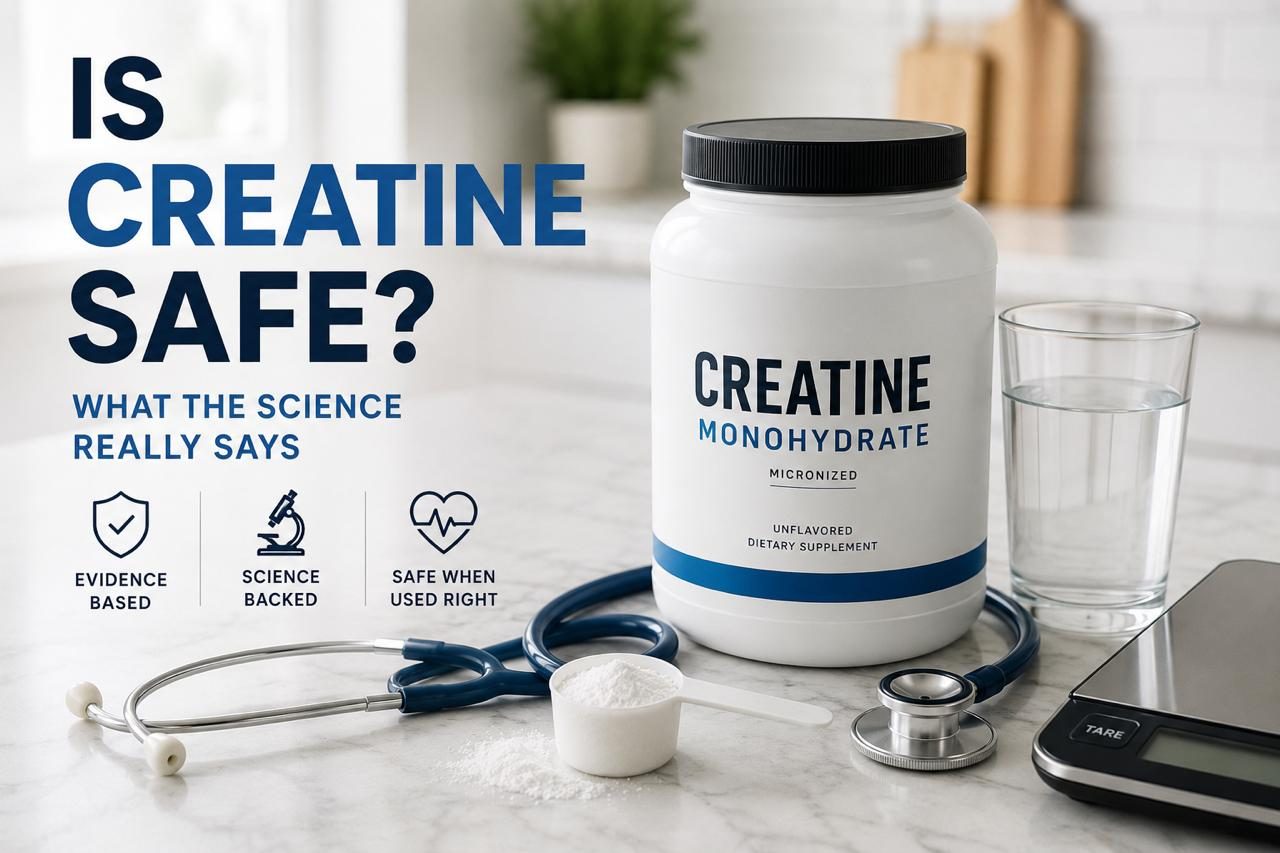
Is Creatine Safe? What the Science Really Says
Quick Summary
- Creatine monohydrate is one of the most extensively studied sports supplements available.
- Current evidence indicates that creatine is safe for healthy adults when taken at recommended dosages.
- Research has not shown that creatine damages healthy kidneys or the liver.
- Mild digestive discomfort and temporary water retention are the most commonly reported side effects.
- People with kidney disease or other significant medical conditions should consult a healthcare professional before using creatine.
Featured Snippet Box
| Question | Evidence-Based Answer |
|---|---|
| Is creatine safe? | Yes, for most healthy adults. |
| Safe daily dose | 3–5 g of creatine monohydrate. |
| Does it damage kidneys? | Not in healthy individuals according to current evidence. |
| Common side effects | Mild bloating, water retention, and digestive discomfort. |
| Best-studied form | Creatine monohydrate. |
| Safe for long-term use? | Yes, based on current research in healthy adults. |
Introduction
Yes—creatine monohydrate is generally considered safe for healthy adults when taken at recommended dosages. In fact, it is one of the most extensively researched dietary supplements in sports nutrition, with decades of clinical studies supporting both its safety and effectiveness.
Despite this strong scientific evidence, misconceptions about creatine continue to circulate. Concerns about kidney damage, liver problems, dehydration, hair loss, and other potential side effects are common, even though many of these claims are not supported by high-quality research.
This article reviews what current scientific evidence says about creatine safety, examines its potential side effects, explains who should use caution, and helps you decide whether creatine supplementation is appropriate for your individual situation.
Is Creatine Safe?
For healthy adults, the answer is yes.
Numerous systematic reviews, randomized controlled trials, and position statements from organizations such as the International Society of Sports Nutrition (ISSN) conclude that creatine monohydrate is safe when consumed at recommended doses.
Research spanning several decades has evaluated creatine in recreational exercisers, competitive athletes, older adults, and a variety of clinical populations.
Across these studies, creatine has consistently demonstrated an excellent safety profile when used appropriately.
Most healthy adults can safely take:
- 3–5 grams of creatine monohydrate per day
- An optional loading phase of 20 grams daily for 5–7 days, divided into four servings
- Long-term maintenance supplementation following standard dosage recommendations
These recommendations have been used in numerous clinical trials without evidence of serious adverse health effects in healthy individuals.
Bottom Line:
Current scientific evidence consistently supports the safety of creatine monohydrate for healthy adults when taken as recommended.
Does Creatine Damage Your Kidneys?
This is one of the most common concerns—and one of the biggest misconceptions.
Current evidence does not support the claim that creatine damages healthy kidneys.
The confusion largely comes from the fact that creatine supplementation can slightly increase blood creatinine levels.
Creatinine is a normal waste product formed when creatine is broken down. Because blood creatinine is commonly used to assess kidney function, higher levels can sometimes be misinterpreted as kidney damage.
In reality, a small increase in creatinine after taking creatine does not necessarily indicate impaired kidney function.
Multiple long-term clinical studies have found no evidence that recommended creatine supplementation harms kidney function in healthy adults.
People with diagnosed kidney disease, reduced kidney function, or other significant renal disorders should consult their healthcare provider before beginning supplementation.
Important:
Elevated blood creatinine after taking creatine is not the same as kidney damage. Healthcare professionals interpret laboratory results alongside other measures of kidney function.
Does Creatine Harm Your Liver?
Current evidence says no.
Like the kidneys, the liver has been carefully evaluated in numerous creatine studies. Researchers have consistently found no evidence that recommended doses of creatine monohydrate cause liver damage in healthy adults.
Long-term clinical trials measuring liver enzymes—including ALT and AST—have not shown clinically significant changes associated with standard creatine supplementation.
It's important to remember that many factors can influence liver health, including:
- Excessive alcohol consumption
- Certain prescription medications
- Viral hepatitis
- Obesity and fatty liver disease
- Other underlying medical conditions
In healthy individuals, creatine has not been shown to increase the risk of liver disease.
People with existing liver conditions should consult their healthcare provider before starting any dietary supplement.
Best Practice:
If you have a chronic medical condition affecting the liver or kidneys, discuss creatine supplementation with your healthcare professional before use.
What Are the Most Common Side Effects of Creatine?
Most people experience no significant side effects when taking creatine at recommended dosages.
When side effects do occur, they are usually mild and temporary.
The most commonly reported include:
- Mild bloating
- Temporary water retention
- Stomach discomfort
- Diarrhea, particularly after taking large single doses
- Nausea in sensitive individuals
Many of these symptoms occur during a loading phase because taking 20 grams in one day can temporarily overwhelm the digestive system.
Splitting larger doses into several smaller servings often improves tolerance.
Does Creatine Cause Water Retention?
Yes—but not in the way many people assume.
Creatine increases the amount of water stored inside muscle cells, where it supports normal muscle function and energy production.
This differs from the type of fluid retention that causes generalized swelling.
For many athletes, increased intracellular water is considered a normal and beneficial part of creatine supplementation.
Does Creatine Cause Hair Loss?
Current evidence does not show that creatine causes hair loss.
This concern originated from a small study published in 2009 that observed an increase in dihydrotestosterone (DHT)—a hormone associated with male pattern baldness—in a group of rugby players after creatine supplementation.
However, the study:
- Did not measure actual hair loss.
- Included a relatively small number of participants.
- Has not been consistently replicated.
Since then, multiple reviews have examined the available evidence and concluded that there is no convincing clinical evidence linking creatine supplementation to hair loss.
Individuals who are genetically predisposed to androgenetic alopecia may still have concerns, but current research does not establish creatine as a direct cause.
Important:
At present, there is no high-quality evidence demonstrating that creatine supplementation causes hair loss.
Is Creatine Safe for Women?
Yes.
Current evidence indicates that creatine is safe and effective for healthy women.
Although creatine has traditionally been associated with bodybuilding, research increasingly suggests that women may also benefit from supplementation.
Potential benefits include:
- Improved strength
- Better high-intensity exercise performance
- Enhanced resistance training adaptations
- Support for lean muscle maintenance
- Improved recovery from intense exercise
Some emerging research is also exploring creatine's role during pregnancy, aging, and certain neurological conditions, but these areas require further study before firm recommendations can be made.
Healthy adult women who choose to supplement generally follow the same evidence-based dosage recommendations as men.
If you're wondering how much creatine to take, How Much Creatine Should You Take Per Day? explains the recommended dosage in detail.
Is Creatine Safe for Teenagers?
The answer is more nuanced.
Current evidence has not identified major safety concerns in healthy adolescent athletes who use creatine responsibly under appropriate supervision.
However, routine supplementation is not recommended for every teenager.
Professional organizations generally suggest that creatine should only be considered when:
- The athlete participates in serious, structured training.
- Nutrition is already optimized.
- Parents or guardians are involved.
- Supplement use is supervised by qualified healthcare or sports nutrition professionals.
For most younger athletes, improving training habits, sleep, and overall nutrition should remain the primary focus before considering supplementation.
Who Should Avoid Creatine or Speak With a Healthcare Professional?
Although creatine is considered safe for most healthy adults, it is not appropriate for everyone.
You should consult a qualified healthcare professional before taking creatine if you:
- Have diagnosed kidney disease.
- Have chronic liver disease.
- Are pregnant or breastfeeding.
- Take medications that may affect kidney function.
- Have another significant medical condition requiring ongoing treatment.
A healthcare professional can determine whether creatine supplementation is appropriate based on your medical history and overall health.
For healthy adults without these conditions, current evidence supports the safety of recommended creatine supplementation.
Is Creatine Safe to Take Every Day?
Yes.
Daily supplementation is actually how creatine is intended to be used.
Creatine works by gradually increasing and maintaining muscle creatine stores over time. Taking it consistently each day helps keep those stores elevated, allowing you to maintain its performance benefits.
Most healthy adults can safely take:
- 3–5 grams of creatine monohydrate daily
- With or without food
- At any convenient time of day
Research lasting several months—and, in some cases, years—has not identified safety concerns associated with long-term daily supplementation in healthy individuals.
If you're unsure about the correct dosage, How Much Creatine Should You Take Per Day? explains the evidence-based recommendations in greater detail.
Bottom Line:
Daily creatine supplementation at recommended doses is considered safe for healthy adults and is the approach used in most scientific studies.
Is Creatine the Safest Sports Supplement?
It is certainly among the most extensively researched.
Few sports supplements have been studied as thoroughly as creatine monohydrate.
Over the past three decades, researchers have evaluated its safety across diverse populations, including:
- Recreational exercisers
- Competitive athletes
- Older adults
- Women
- Clinical populations with specific health conditions
Major sports nutrition organizations continue to recognize creatine monohydrate as both safe and effective when used responsibly.
That does not mean every supplement sold as "creatine" offers the same quality.
Choosing products that undergo third-party testing and are manufactured by reputable companies helps reduce the risk of contamination and ensures you're receiving the ingredient studied in clinical research.
Fun Fact
Creatine is one of the few dietary supplements with enough scientific evidence to support official position stands from organizations such as the International Society of Sports Nutrition, which continues to recognize creatine monohydrate as both safe and effective for healthy adults.
Myths vs. Facts
Myth
Creatine damages healthy kidneys.
Fact
Current scientific evidence has not shown that recommended creatine supplementation harms kidney function in healthy adults.
Myth
Creatine causes liver damage.
Fact
Long-term clinical studies have not demonstrated harmful effects on liver function in healthy individuals.
Myth
Creatine causes hair loss.
Fact
There is currently no high-quality clinical evidence showing that creatine supplementation directly causes hair loss.
Myth
Creatine is unsafe if taken every day.
Fact
Daily supplementation is the standard approach used in most research and is considered safe for healthy adults when recommended dosages are followed.
Myth
Creatine is only safe for bodybuilders.
Fact
Research has evaluated creatine in many populations, including recreational exercisers, women, older adults, and competitive athletes.
Key Takeaways
- Creatine monohydrate is one of the most extensively researched dietary supplements available.
- Current evidence indicates that recommended doses are safe for healthy adults.
- Research does not support the claim that creatine damages healthy kidneys or the liver.
- Mild bloating, water retention, and digestive discomfort are the most commonly reported side effects.
- Daily supplementation of 3–5 grams is considered safe for most healthy adults.
- Individuals with kidney disease or other significant medical conditions should seek medical advice before using creatine.
- Choosing high-quality creatine monohydrate from reputable manufacturers is the best way to maximize safety.
Conclusion
Current scientific evidence provides a clear answer: creatine monohydrate is safe for most healthy adults when taken at recommended dosages.
Despite persistent myths about kidney damage, liver disease, dehydration, and hair loss, decades of high-quality research have consistently supported creatine's safety profile. For healthy individuals, recommended daily supplementation has not been shown to cause serious adverse health effects.
As with any dietary supplement, people with existing medical conditions or those taking medications should seek personalized medical advice before beginning supplementation.
If you're considering adding creatine to your routine, How Much Creatine Should You Take Per Day? explains the evidence-based dosage recommendations and how to use creatine effectively.
Continue Learning
- What Is Creatine and How Does It Work?
- How Much Creatine Should You Take Per Day?
- Should You Take Creatine Every Day?
- Best Time to Take Creatine
- Creatine Loading Phase Explained
Kayvero Tools
- Creatine Calculator
- Water Intake Calculator
- Protein Calculator
- Calorie Calculator
Medical Disclaimer
This article is intended for educational purposes only and should not replace individualized medical advice. If you have kidney disease, liver disease, are pregnant or breastfeeding, or have another underlying medical condition, consult a qualified healthcare professional before using creatine or any dietary supplement.
Scientific References
Kreider RB, Antonio J, Candow DG, et al. International Society of Sports Nutrition Position Stand: Creatine Supplementation in Exercise, Sport, and Medicine. Journal of the International Society of Sports Nutrition. 2022.
Antonio J, Candow DG, Forbes SC, et al. Common Questions and Misconceptions About Creatine Supplementation: What Does the Scientific Evidence Really Show? Journal of the International Society of Sports Nutrition. 2021.
Kreider RB, Kalman DS, Antonio J, et al. International Society of Sports Nutrition Position Stand: Safety and Efficacy of Creatine Supplementation in Exercise, Sport, and Medicine. Journal of the International Society of Sports Nutrition. 2017.
Persky AM, Brazeau GA. Clinical Pharmacology of the Dietary Supplement Creatine Monohydrate. Pharmacological Reviews. 2001.
Candow DG, Forbes SC, Chilibeck PD, Cornish SM, Antonio J, Kreider RB. Effectiveness of Creatine Supplementation on Aging Muscle and Bone: Focus on Falls Prevention and Inflammation. Journal of Clinical Medicine. 2019.
Balsom PD, Söderlund K, Ekblom B. Creatine in Humans With Special Reference to Creatine Supplementation. Sports Medicine. 1994.
EFSA Panel on Dietetic Products, Nutrition and Allergies (NDA). Scientific Opinion on the Substantiation of Health Claims Related to Creatine and Improvement of Physical Performance During Successive Bursts of Short-Term, High-Intensity Exercise. EFSA Journal. 2011.
Jäger R, Purpura M, Shao A, et al. International Society of Sports Nutrition Position Stand: Dietary Supplements and Safety. Journal of the International Society of Sports Nutrition. 2019.
Frequently asked questions
- Is creatine safe to take every day?
Yes. Current evidence indicates that creatine monohydrate is safe for daily use in healthy adults when consumed at recommended dosages. Long-term studies have not shown harmful effects on kidney or liver function in healthy individuals.
- Does creatine damage your kidneys?
Research has not demonstrated that creatine causes kidney damage in healthy people. However, individuals with pre-existing kidney disease or impaired kidney function should consult a healthcare professional before using creatine.
- Is creatine safe for long-term use?
Yes. Multiple studies lasting several months to years have found creatine monohydrate to be safe when used at recommended doses by healthy adults.
- What are the most common side effects of creatine?
The most commonly reported side effects are mild digestive discomfort, temporary water retention, and bloating, particularly during a loading phase. Serious side effects are uncommon when recommended dosages are followed.
- Is creatine safe for women?
Yes. Current research indicates that creatine is safe for healthy women and may support improvements in strength, exercise performance, and muscle function when combined with regular training.
- Is creatine safe for teenagers?
Creatine may be appropriate for some adolescent athletes under professional supervision, but routine supplementation for teenagers should be discussed with a qualified healthcare provider or sports nutrition professional.
- Who should avoid taking creatine?
Individuals with kidney disease, significant underlying medical conditions, or those who are pregnant or breastfeeding should seek medical advice before using creatine supplements.
- Which form of creatine is considered the safest?
Creatine monohydrate is the most extensively researched form of creatine and has the strongest evidence supporting both its safety and effectiveness.
Continue learning
- Can You Take Creatine Every Day?Yes. Most healthy adults can take creatine monohydrate every day at an evidencebased maintenance dose.Read article
- How Much Creatine Should You Take Per Day?Most healthy adults only need 3–5 grams of creatine monohydrate per day. A loading phase is optional and simply helps saturate muscles more quickly. Larger athletes may benefit from maintenance doses at the upper end of the recommended rangRead article
- Creatine vs Whey Protein: Which Should You Take?Creatine and whey protein serve different purposes and are not direct competitors. Whey protein helps you meet your daily protein needs and supports muscle recovery. Creatine improves highintensity exercise performance by increasing muscle Read article
- How to Take Creatine: Dosage, Timing & Best PracticesCreatine is one of the most effective and wellresearched sports supplements available—but many people still wonder how to take it correctly.Read article
Related calculators
- Creatine CalculatorOpen calculator
- Water Intake CalculatorOpen calculator
- Protein CalculatorOpen calculator
- Calorie CalculatorOpen calculator
- Calorie calculatorYour daily calorie target in seconds.Open calculator
- Macro calculatorSplit protein, carbs and fat for your goal.Open calculator
- Meal plannerBuild meals with real nutrition data.Open calculator
- Food databaseNutrition facts for thousands of foods.Open calculator
Recommended products


