Supplements
Should You Cycle Creatine? What Science Really Says
Current research does not support cycling creatine for healthy adults. Daily supplementation of 3–5 grams is considered safe and effective. Taking breaks has not been shown to improve safety or effectiveness. Stopping creatine gradually red
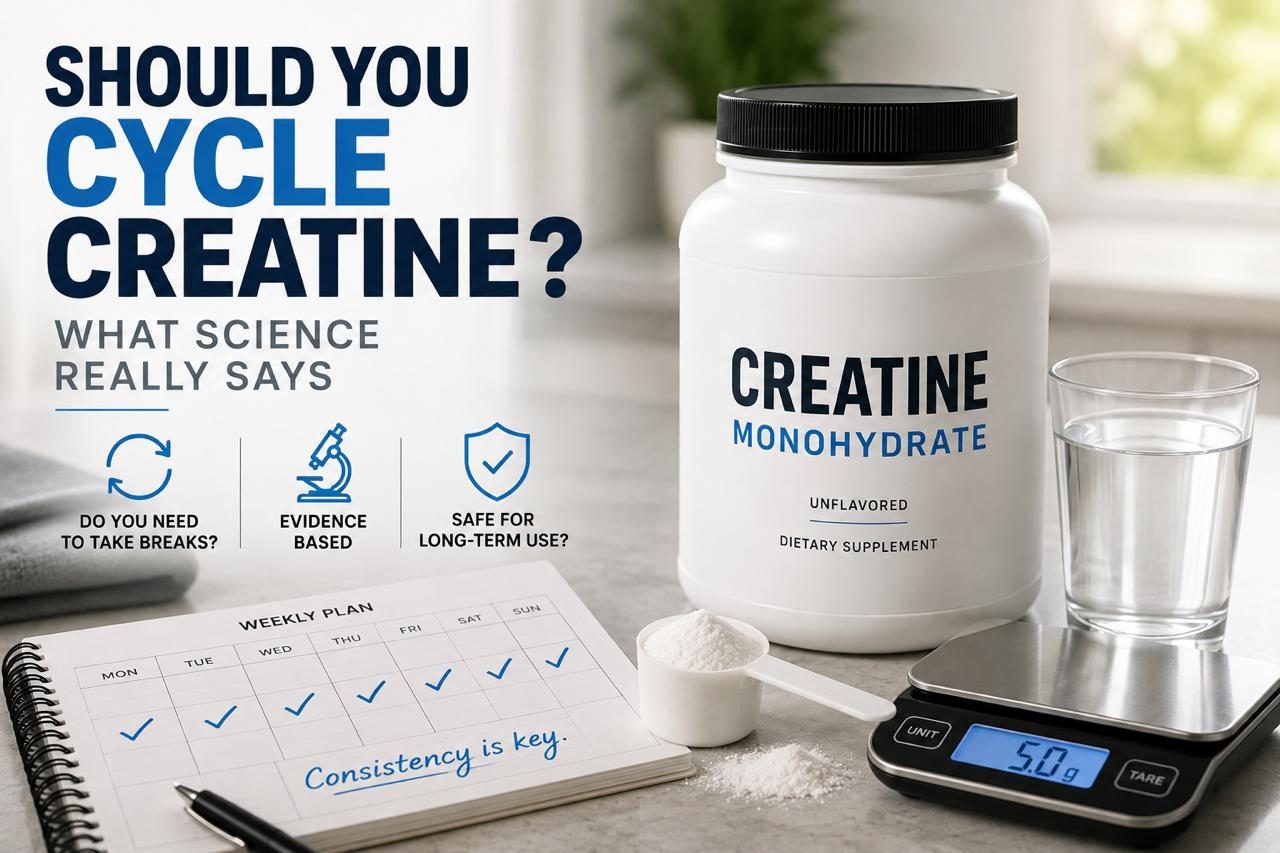
Should You Cycle Creatine? What Science Really Says
Quick Summary
- Current research does not support cycling creatine for healthy adults.
- Daily supplementation of 3–5 grams is considered safe and effective.
- Taking breaks has not been shown to improve safety or effectiveness.
- Stopping creatine gradually reduces muscle creatine stores over several weeks.
- Consistent daily use remains the evidence-based approach.
Featured Snippet Box
| Question | Evidence-Based Answer |
|---|---|
| Should you cycle creatine? | No, current research does not recommend it. |
| Do you need breaks? | No evidence suggests scheduled breaks are beneficial. |
| Daily maintenance dose | 3–5 g per day |
| Does creatine stop working? | No, consistent use maintains muscle stores. |
| What happens if you stop? | Muscle creatine gradually returns to baseline. |
| Long-term use | Considered safe for healthy adults. |
Introduction
No—most healthy adults do not need to cycle creatine. Current scientific evidence shows that taking creatine monohydrate continuously at recommended dosages is both safe and effective, with no proven advantage to regularly stopping and restarting supplementation.
The idea of "cycling" creatine became popular years ago, largely through bodybuilding forums and supplement marketing rather than high-quality scientific research. Today, decades of clinical studies have found no evidence that scheduled breaks improve creatine's effectiveness, reduce side effects, or protect long-term health.
This article explains where the idea of creatine cycling came from, what current research says about long-term supplementation, whether taking breaks offers any benefits, and when stopping creatine might actually make sense.
Should You Cycle Creatine?
For nearly everyone, the answer is no.
Current evidence indicates that creatine monohydrate can be taken continuously without planned cycling.
The reason is simple: creatine works by increasing and maintaining the amount of creatine stored inside your muscles. As long as you continue taking an appropriate maintenance dose, those stores remain elevated and continue supporting high-intensity exercise performance.
No major sports nutrition organization—including the International Society of Sports Nutrition (ISSN)—recommends routine creatine cycling for healthy adults.
Instead, the evidence-based approach is straightforward:
- Take 3–5 grams of creatine monohydrate daily.
- Continue supplementation consistently.
- Stop only if you personally choose to or if advised by a healthcare professional.
Research has not demonstrated that cycling improves muscle growth, strength, exercise performance, or safety.
Bottom Line:
There is currently no scientific reason for healthy adults to cycle creatine. Daily, consistent supplementation remains the approach supported by the strongest evidence.
Where Did the Idea of Creatine Cycling Come From?
The recommendation to cycle creatine became popular during the early years of sports supplementation, when researchers had far less long-term safety data than they do today.
Some early theories suggested that continuously taking creatine might:
- Cause the body to stop producing its own creatine.
- Reduce the supplement's effectiveness over time.
- Increase the risk of kidney damage.
- Require "resetting" muscle responsiveness through periodic breaks.
As more long-term studies became available, these concerns were largely unsupported.
Researchers found that the body continues producing creatine naturally, even during supplementation, although production may temporarily decrease while supplementation is ongoing. Once supplementation stops, normal production gradually returns without evidence of lasting impairment.
Likewise, studies have not shown that muscles become "resistant" to creatine or that cycling restores effectiveness.
Important:
Most recommendations to cycle creatine are based on outdated beliefs rather than current scientific evidence.
Does Creatine Stop Working If You Never Cycle It?
No.
One of the most persistent myths about creatine is that your body eventually "gets used to it," making the supplement less effective unless you periodically stop taking it.
Current research does not support this claim.
Creatine works by increasing the concentration of phosphocreatine stored inside your muscles. Once those stores are saturated, continuing to take a maintenance dose simply keeps them at an elevated level.
This is very different from substances that produce tolerance, such as caffeine.
With caffeine, the body gradually becomes less responsive over time. Creatine does not appear to behave this way.
Studies lasting months—and in some cases years—continue to demonstrate benefits for strength, power, and resistance training performance without evidence that continuous supplementation becomes ineffective.
Best Practice:
Think of creatine as maintaining your muscles' energy reserves rather than producing a short-term stimulant effect. Consistency—not cycling—is what keeps those stores elevated.
What Happens If You Stop Taking Creatine?
Stopping creatine is completely safe.
However, muscle creatine stores gradually return to their normal baseline over time.
This process usually takes two to four weeks, depending on factors such as:
- Muscle mass
- Daily diet
- Training frequency
- Individual metabolism
As muscle creatine levels decline, some of the performance benefits associated with supplementation may gradually decrease.
You may notice:
- Slight reductions in strength
- Lower training volume
- Reduced power output during explosive exercise
- Small decreases in body weight caused by reduced intracellular water
Importantly, this is not muscle loss.
Most of the early weight change reflects a reduction in the amount of water naturally stored inside muscle cells while creatine levels return to normal.
Are There Any Benefits to Cycling Creatine?
Current evidence suggests very few, if any.
Researchers have not demonstrated that cycling creatine:
- Improves muscle growth
- Increases strength gains
- Restores effectiveness
- Prevents side effects
- Protects kidney function in healthy adults
- Improves long-term safety
Because these proposed benefits have not been supported by high-quality evidence, routine cycling is generally unnecessary.
The only practical reason to stop creatine is personal preference or advice from a qualified healthcare professional.
If your goal is maximizing training performance, remaining consistent is likely to provide better results than repeatedly stopping and restarting supplementation.
Important:
There is no evidence-based performance advantage to cycling creatine in healthy adults.
Are There Situations Where Someone Might Stop Taking Creatine?
Yes—but these situations are usually based on personal circumstances rather than scientific necessity.
Someone may choose to stop creatine if they:
- No longer participate in regular resistance training.
- Prefer not to use dietary supplements.
- Experience digestive discomfort despite adjusting the dosage.
- Need to follow medical advice related to an underlying health condition.
Competitive athletes should also ensure that any supplement they use comes from a reputable manufacturer with appropriate third-party quality testing.
Stopping creatine temporarily for these reasons is perfectly reasonable, but it should not be confused with routine "cycling."
If you're wondering whether long-term creatine use is safe, Is Creatine Safe? reviews the evidence behind creatine's safety profile in much greater detail.
Does Long-Term Creatine Use Affect Natural Creatine Production?
Not permanently.
Your body naturally produces creatine in the liver, kidneys, and pancreas.
During supplementation, this natural production may decrease slightly because your body recognizes that additional creatine is already available.
Once supplementation ends, natural creatine production gradually returns to its normal level.
Current research has found no evidence that long-term supplementation permanently suppresses your body's ability to produce creatine.
This is one reason sports nutrition experts do not recommend cycling as a way to "restart" natural creatine production.
Bottom Line:
Temporary adjustments in natural creatine production are normal and reversible. They do not provide a scientific reason to cycle creatine.
Fun Fact
Your body naturally produces about 1–2 grams of creatine each day, even if you never take a supplement. Creatine supplementation simply increases your muscle creatine stores beyond what diet and natural production can usually achieve, which is why continuous supplementation—not cycling—is effective.
Myths vs. Facts
Myth
You must cycle creatine every few months.
Fact
Current scientific evidence does not support routine creatine cycling. Most research evaluates continuous daily supplementation.
Myth
Your body stops making creatine if you supplement for too long.
Fact
Natural creatine production may temporarily decrease during supplementation, but it returns to normal after supplementation stops.
Myth
Cycling makes creatine work better.
Fact
There is no evidence that taking scheduled breaks improves creatine's effectiveness or increases muscle gains.
Myth
Stopping creatine causes muscle loss.
Fact
Stopping creatine gradually reduces muscle creatine stores and intracellular water, but it does not directly cause muscle tissue loss.
Myth
Cycling protects your kidneys.
Fact
Current evidence indicates that recommended creatine supplementation is safe for healthy adults, and cycling has not been shown to provide additional kidney protection.
Key Takeaways
- Healthy adults do not need to cycle creatine based on current scientific evidence.
- Daily supplementation of 3–5 grams of creatine monohydrate is the evidence-based recommendation.
- Cycling has not been shown to improve safety, effectiveness, or muscle growth.
- Stopping creatine simply allows muscle creatine stores to gradually return to baseline over several weeks.
- Your body naturally resumes normal creatine production after supplementation ends.
- Consistent daily use is the strategy supported by major sports nutrition organizations.
- Choosing a high-quality creatine monohydrate supplement and following recommended dosages is more important than cycling.
Conclusion
Current research provides a clear answer: you do not need to cycle creatine.
Decades of scientific evidence show that healthy adults can safely take creatine monohydrate every day at recommended doses without reducing its effectiveness or harming their long-term health. The idea that muscles become resistant to creatine or that scheduled breaks are necessary is not supported by modern research.
If you decide to stop taking creatine, your muscle creatine stores will gradually return to normal over the following weeks, but there is no physiological requirement to take regular breaks.
If you're still unsure about daily supplementation, Should You Take Creatine Every Day? explains why consistent use remains the evidence-based approach.
Continue Learning
- Should You Take Creatine Every Day?
- Is Creatine Safe?
- How Much Creatine Should You Take Per Day?
- What Is Creatine and How Does It Work?
- Best Time to Take Creatine
Kayvero Tools
- Creatine Calculator
- Water Intake Calculator
- Protein Calculator
- Calorie Calculator
Medical Disclaimer
This article is intended for educational purposes only and should not replace individualized medical advice. If you have kidney disease, another significant medical condition, or questions about creatine supplementation, consult a qualified healthcare professional before use.
Scientific References
Kreider RB, Antonio J, Candow DG, et al. International Society of Sports Nutrition Position Stand: Creatine Supplementation in Exercise, Sport, and Medicine. Journal of the International Society of Sports Nutrition. 2022.
Antonio J, Candow DG, Forbes SC, et al. Common Questions and Misconceptions About Creatine Supplementation: What Does the Scientific Evidence Really Show? Journal of the International Society of Sports Nutrition. 2021.
Kreider RB, Kalman DS, Antonio J, et al. International Society of Sports Nutrition Position Stand: Safety and Efficacy of Creatine Supplementation in Exercise, Sport, and Medicine. Journal of the International Society of Sports Nutrition. 2017.
Persky AM, Brazeau GA. Clinical Pharmacology of the Dietary Supplement Creatine Monohydrate. Pharmacological Reviews. 2001.
Balsom PD, Söderlund K, Ekblom B. Creatine in Humans With Special Reference to Creatine Supplementation. Sports Medicine. 1994.
Candow DG, Forbes SC, Chilibeck PD, Cornish SM, Antonio J, Kreider RB. Effectiveness of Creatine Supplementation on Aging Muscle and Bone: Focus on Falls Prevention and Inflammation. Journal of Clinical Medicine. 2019.
EFSA Panel on Dietetic Products, Nutrition and Allergies (NDA). Scientific Opinion on the Substantiation of Health Claims Related to Creatine and Improvement of Physical Performance During Successive Bursts of Short-Term, High-Intensity Exercise. EFSA Journal. 2011.
Jäger R, Purpura M, Shao A, et al. International Society of Sports Nutrition Position Stand: Dietary Supplements and Safety. Journal of the International Society of Sports Nutrition. 2019.
Frequently asked questions
- Should you cycle creatine?
No. Current scientific evidence does not support cycling creatine for healthy adults. Continuous daily supplementation at recommended doses is considered safe and effective.
- Do you need to take a break from creatine?
No. Research has not shown that taking scheduled breaks improves creatine's effectiveness or safety. Most studies use continuous supplementation without cycling.
- Is it safe to take creatine all year?
Yes. Long-term studies indicate that creatine monohydrate is safe for healthy adults when taken daily at recommended dosages.
- Will creatine stop working if I don't cycle it?
No. Creatine does not lose its effectiveness because you take it continuously. It works by maintaining elevated muscle creatine stores over time.
- What happens if you stop taking creatine?
Muscle creatine stores gradually return to baseline over several weeks. Any performance benefits associated with supplementation may slowly diminish during that time.
- Can you build a tolerance to creatine?
Current evidence does not suggest that healthy adults develop a tolerance requiring cycling or progressively higher doses.
- Why do some people recommend cycling creatine?
Many cycling recommendations are based on outdated advice or personal opinion rather than scientific evidence. Current research does not support routine creatine cycling.
- Who should talk to a healthcare professional before taking creatine?
Individuals with kidney disease, significant medical conditions, or those who are pregnant or breastfeeding should seek professional medical advice before using creatine.
Continue learning
- Can You Take Creatine Every Day?Yes. Most healthy adults can take creatine monohydrate every day at an evidencebased maintenance dose.Read article
- How Much Creatine Should You Take Per Day?Most healthy adults only need 3–5 grams of creatine monohydrate per day. A loading phase is optional and simply helps saturate muscles more quickly. Larger athletes may benefit from maintenance doses at the upper end of the recommended rangRead article
- Creatine vs Whey Protein: Which Should You Take?Creatine and whey protein serve different purposes and are not direct competitors. Whey protein helps you meet your daily protein needs and supports muscle recovery. Creatine improves highintensity exercise performance by increasing muscle Read article
- How to Take Creatine: Dosage, Timing & Best PracticesCreatine is one of the most effective and wellresearched sports supplements available—but many people still wonder how to take it correctly.Read article
Related calculators
- Creatine CalculatorOpen calculator
- Water Intake CalculatorOpen calculator
- Protein CalculatorOpen calculator
- Calorie CalculatorOpen calculator
- Calorie calculatorYour daily calorie target in seconds.Open calculator
- Macro calculatorSplit protein, carbs and fat for your goal.Open calculator
- Meal plannerBuild meals with real nutrition data.Open calculator
- Food databaseNutrition facts for thousands of foods.Open calculator
Recommended products


